

Feature & Workflow
Step-by-step guides and workflow articles for using AI fashion design, 3D garment creation, virtual sampling, ecommerce visuals, and Style3D AI features more effectively.


How to Use AI Background Remover for Fashion Images?
Style3D AI's Background Remove automatically erases backgrounds from fashion product images, while Cutout precisely isolates garments or models for transparent PNGs. Upload your apparel photo, click generate, and get clean results in seconds—ideal for e-commerce listings. Free tier offers 50+ images; integrates with virtual try-on for photoshoot-free workflows. What Is AI Background Remover and Why Fashion Needs It? AI background remover is a tool that uses artificial intelligence to automati

How can you convert 3D models to 2D patterns in fashion?
Learn how 3D garment models are converted into production-ready 2D patterns using AI, pattern extraction, fabric simulation, and digital fashion technologies. Discover key workflows, benefits, and best practices for modern fashion development.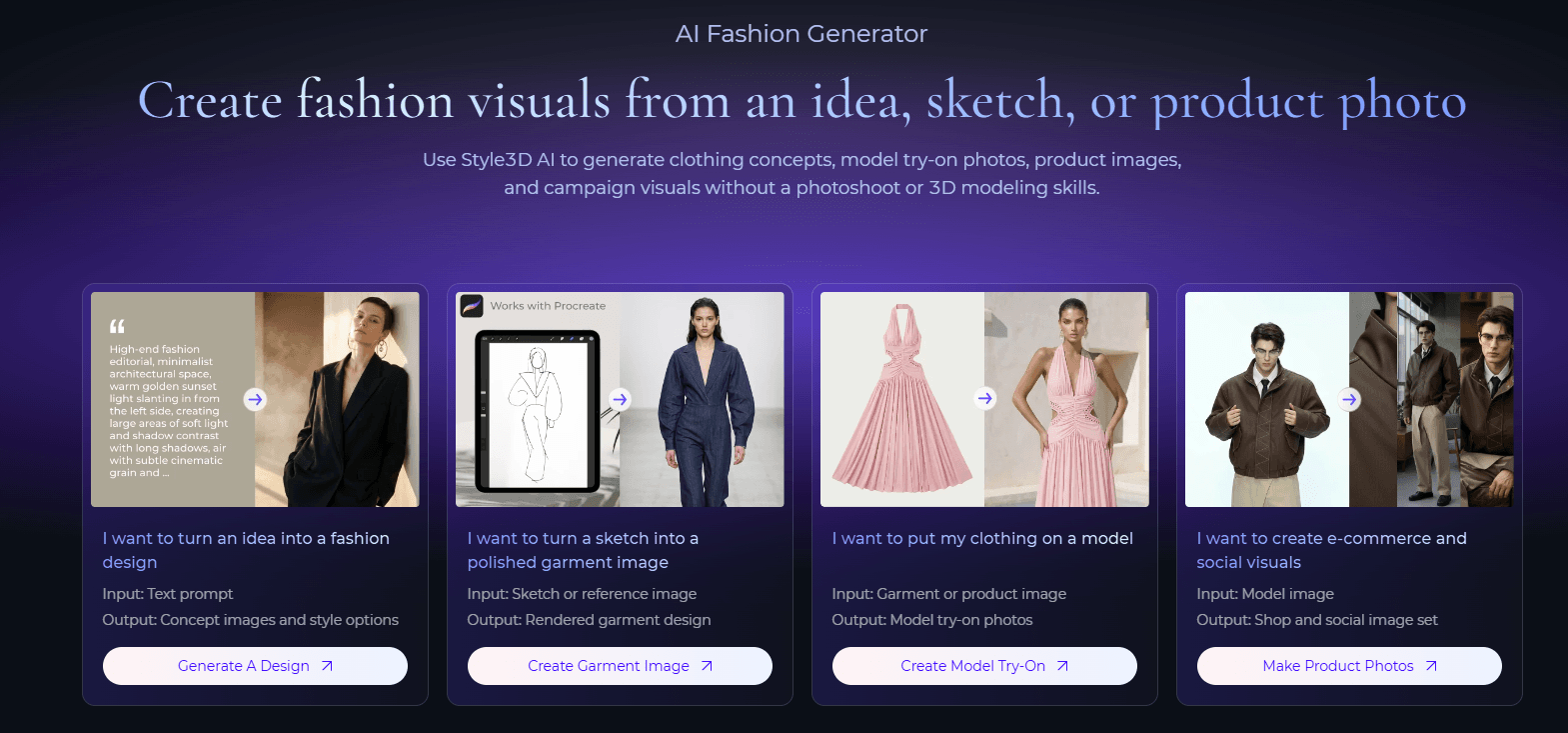

How to Create Realistic Fabric Textures for Fashion Marketing with AI
An AI fabric texture maker is a tool that applies realistic fabric textures—velvet, leather, cotton, silk—to garment designs and marketing images instantly. Style3D AI's Fabric Try-On enables designers to visualize material variations on apparel without physical samples, reducing production time and costs while maintaining photorealistic quality for e-commerce and campaigns. What Is an AI Fabric Texture Maker and Why Do Fashion Teams Need One? An AI fabric texture maker is software that gener
How to Use 3D Furniture Design AI for Fast Sofa Concepts and Marketing Images?
Style3D AI enables 3D furniture design AI workflows via 2D tools: use Text to Style for instant sofa concepts from prompts, Creative Merge for style fusions, Color Replacement for materials, and Style Pose/Curtain Try-On for marketing visuals—generate 50+ free images without samples or photoshoots, cutting costs for designers and e-commerce teams. What Is 3D Furniture Design AI and Why Choose 2D Visualization Tools? 3D furniture design AI refers to tools that generate functional and aesthetic
What Is 3D AI Design and How Does It Transform Creativity?
Learn what 3D AI design is and how artificial intelligence is transforming 3D modeling, visualization, and digital product creation. Explore AI-powered design workflows, key benefits, leading tools, and how 3D AI design helps fashion designers create digital garments faster and more efficiently
How Does AI Auto-UV Unwrapping Work in Fashion Design?
AI auto-UV unwrapping in fashion design automates pattern and texture mapping on 2D garment images, eliminating manual adjustments for seamless visuals. Style3D AI's Smart Decal, Decal Merge, and Color Replacement tools instantly apply prints, colors, and graphics while preserving fabric texture—ideal for e-commerce and marketing without physical samples. Generate 50+ free images to start. Check: Style Redraw What Is AI Auto-UV Unwrapping in Fashion Design? AI auto-UV unwrapping automates th
Is Virtual Try-On with Clothes Changer Video AI Defining the Future of Fashion?
Learn how AI clothes changer video technology works and how video virtual try-on is transforming fashion ecommerce. Explore the benefits, leading AI workflows, practical use cases, and how fashion brands create realistic try-on videos with AI.