

In 2026, the design industry is undergoing a complete transformation. The traditional hand-drawn sketch is slowly fading from professional workflows, replaced by an AI Graphic revolution powered by Text to Style technology. Designers no longer rely on pen and paper; instead, they describe their ideas through text prompts, visual cues, or style tags to instantly generate fully realized creative drafts, fashion visuals, or commercial renders. The jump from concept to image now happens in seconds—a shift that turns "hand-drawing" into nostalgia rather than necessity.
The Decline of Hand-Drawn Sketches
Modern creative industries are demanding unprecedented speed, scale, and visual variety. Traditional sketching struggles to keep up, hindered by long production cycles, high revision costs, and limited collaboration efficiency. A growing share of industrial and fashion design companies have adopted AI-based creation tools to meet the growing need for instant visualization and mass content production.
AI Graphic tools understand both language and aesthetic logic. They can instantly translate written descriptions—colors, materials, silhouettes, and moods—into visual compositions. Whether for product concepts, industrial forms, or fashion outlines, AI can generate accurate, editable sketches in seconds. The collaboration between human creativity and AI precision is eliminating the repetitive drafting process and redefining the designer's workflow.
From “Style to Sketch” to “Text to Style”: The Efficiency Revolution
Early AI tools in design were limited to generating visual variations based on an existing sketch or image—a method known as “Style to Sketch.” In 2026, the industry has evolved into a “Text to Style” paradigm, where creativity begins directly with language. Designers can type prompts like “minimalist beige tailored suit” or “futuristic asymmetrical dress,” and the AI instantly produces multiple high-fidelity visual drafts in various compositions and lighting.
This shift allows designers to focus on ideas, not manual drawing. The AI simulates natural brushwork, adjusts design parameters in real time, and delivers perfectly stylized visual outcomes with consistent brand tone and aesthetic direction. The result is creative acceleration without artistic compromise.
Amid this transition, one company is leading the charge.
At Style3D AI, the fashion industry is being transformed through an all-in-one AI platform dedicated to fashion design visualization and marketing image creation. The platform empowers designers, brands, and creators to bring fashion ideas to life with exceptional efficiency and creativity through high-quality visual outputs.
Platforms like Style3D AI are driving this shift, combining text-to-style generation with 3D garment visualization so concepts can move from prompt to production-ready visual in one workflow.
AI Graphics vs. Traditional Sketching
Traditional hand sketching depends heavily on personal skill, training, and interpretation, while AI Graphics rely on data-driven aesthetic models trained on thousands of design languages. The contrast is striking:
- Hand drawing requires hours or days per concept; AI produces detailed drafts within minutes.
- Manual revisions involve redrawing; AI regenerates instantly with minor text edits.
- Human sketches vary in consistency; AI ensures unified visual identity across all outputs.
- Artistic bias affects results; AI maintains precision and style memory.
For instance, an industrial design team using AI Graphic tools can generate dozens of concept options—from color variations to material finishes—in less than an hour, whereas traditional workflows would take days. The ability to explore multiple creative paths simultaneously is revolutionizing early-stage design ideation.
Case Study: 200% Faster Design Pipeline
Based on typical implementations reported by teams adopting text-to-style tools: a fashion label integrated AI Graphic systems into its creative workflow and cut its concept development phase from days to hours. Designers now generate 20–30 visual options per prompt and finalize selections through quick refinement rather than full redraws.
Teams reported fewer production iterations, faster approvals, and a shorter design-to-market cycle—plus higher creative satisfaction thanks to increased focus on storytelling and brand identity.
Five Core Reasons AI Is Replacing Hand Sketching
First, time efficiency: AI Graphic tools cut sketch creation time dramatically, which is vital for fast-moving industries like e-commerce, digital marketing, and fashion campaigns.
Second, expanded creativity: Intelligent design suggestions break stylistic boundaries, empowering designers to explore unconventional combinations effortlessly.
Third, frictionless collaboration: Cloud-based generation allows teams in different time zones to share, review, and modify visuals in real time.
Fourth, cost optimization: Reduces hardware, paper, and rendering expenses while eliminating the need for multiple draft iterations.
Fifth, stylistic consistency: AI learns and remembers brand design systems, ensuring every visual asset aligns with established identity guidelines.
The Future of Design: Human Vision, AI Execution
AI is not replacing designers—it's redefining their role. The creative process is shifting from manual skill to conceptual direction. Designers become storytellers, curators of visual meaning, and strategic thinkers. Text to Style embodies a new design philosophy where ideas translate into visuals instantly, and imagination takes center stage.
By 2026, the era of hand-drawn sketches will be remembered fondly but no longer required. In the age of AI-driven creation, design flows as fast as thought itself. Try Text to Style on Style3D AI and turn your first prompt into a finished visual.
FAQs
Will AI replace hand-drawn sketches entirely?
Not entirely. Sketching remains valuable for early ideation and personal style development, but AI text-to-style tools are replacing it in commercial workflows where speed and volume matter.
What is Text to Style in fashion design?
Text to Style is an AI capability that converts written descriptions—colors, materials, silhouettes, moods—into finished visual designs, letting designers start from language instead of a blank page.
Can AI-generated designs maintain brand style consistency?
Yes. AI tools learn brand design systems and apply consistent tone, color, and aesthetic rules across every generated asset.
Is text-to-style suitable for beginner designers?
Yes. Beginners can produce professional-looking visuals from simple prompts, while experienced designers use it to accelerate iteration and exploration.
Written by
What's Next?


What is an Arcane Character Creator and How Can You Use It?
Learn how Arcane character creators use AI to generate stylized avatars, original characters, and fantasy-inspired outfit concepts. Explore the best tools, design workflows, and creative applications for gaming, storytelling, and fashion design.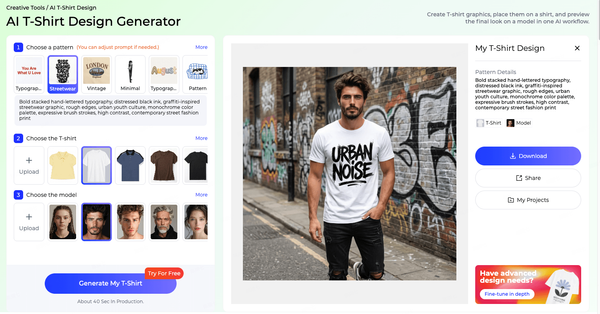


How to Do AI Fashion Style Transfer on Clothing Images?
AI fashion style transfer lets you upload a garment image and text prompt to generate new style variations instantly. Using Style3D AI's Style to Style tool (free tier available), select a reference outfit, describe changes like "cyberpunk streetwear," and produce polished 2D apparel designs in seconds for collections or marketing—eliminating physical samples. What Is AI Fashion Style Transfer and Why Use It for Clothing Designs? AI fashion style transfer is a computational technique that tra


