
How to Create Fabric Textures with AI for Realistic Digital Fashion Design
Learn how to create realistic fabric textures with AI using text prompts, images, or sketches. Discover the best AI fabric texture generators, workflow tips, and tools for fashion design, 3D visualization, and textile development.

AI fabric texture generation is transforming how designers create digital textiles for fashion, product visualization, and 3D design. Modern AI tools can generate seamless patterns, realistic material textures, and high-resolution fabric surfaces from text prompts, reference images, or sketches, reducing manual design time while expanding creative possibilities. These technologies support applications ranging from garment visualization and virtual sampling to textile development and digital marketing. This article explains how AI fabric texture generation works, compares the leading tools, and provides practical guidance for creating production-ready digital fabrics.
Core Technology Behind AI Fabric Texture Generation
At the core of fabric texture generation are generative adversarial networks and diffusion models designed to learn visual cues from massive fabric datasets. Users describe a textile—such as “woven linen with soft matte finish”—and the AI produces seamless, tileable textures that maintain true-to-fabric color variability and pattern grain. Advanced AI models integrate PBR (physically based rendering) maps, generating diffuse, roughness, bump, and normal maps that drive realistic surface behavior in 3D environments. The result is digital fabric that reacts to light, fold, and movement as actual cloth would.
Style-transfer-based neural rendering goes further by applying existing material characteristics to new colorways and patterns. This capability allows designers to explore infinite combinations, crafting everything from sustainable recycled polyester looks to organic cotton meshes, without sourcing physical materials.
Integrating AI Fabric Textures into Fashion and 3D Design
Designers can integrate AI-generated textures into 3D design tools, virtual fashion platforms, and animation pipelines to produce lifelike results. In fashion, AI fabric texture creation supports concept visualization, e-commerce imagery, garment prototyping, and virtual fitting. For interior and digital product design, it enhances realism in upholstery, wallpaper, and decor previews. Seamless fabric generation plays an especially critical role in metaverse content creation, where visual quality defines brand immersion and consumer engagement.
At Style3D AI, the fashion industry is being transformed through an all-in-one AI platform dedicated to fashion design visualization and marketing image creation. The platform empowers designers, brands, and creators to bring fashion ideas to life with exceptional efficiency and creativity through high-quality visual outputs. From turning sketches into polished apparel design images to generating professional marketing visuals, this solution accelerates innovation by uniting 2D and 3D workflows in one ecosystem.
Market Trends and Data
The AI textile generation market is growing at record speed. According to textile industry forecasts, the global digital fabric visualization market is expected to exceed tens of billions in value by 2028. This boom is fueled by apparel brands investing in 3D modeling, texture automation, and AR-based retail presentation. Sustainable fashion initiatives further amplify this shift, as digital textiles reduce waste and carbon emissions by minimizing physical sampling. AI fabric generation is seen as both an ecological and creative advantage.
Top AI Fabric Texture Tools and Use Cases
Competitor Comparison Matrix
Real User Results and ROI
Fashion brands adopting AI texture creation report significant improvements in design cycles. By replacing manual material photography with automated generation, production timelines have been cut by nearly 70%. Marketing teams now create seasonal lookbooks in days instead of weeks, while 3D design students and independent creators gain access to professional-grade materials previously out of reach. AI-based texturing also empowers sustainable brands by lowering sampling waste and improving digital collaboration workflows.
Future Trends Shaping AI Fabric Textures
The future of AI-driven textile textures lies in multimodal generation, where image, text, and tactile data combine to form hyper-realistic materials. Emerging platforms will incorporate dynamic fabric physics simulation, enabling digital textiles that behave according to elasticity, wrinkle intensity, and environmental lighting. Integration with augmented and virtual reality experiences will further close the gap between digital and physical fashion. Meanwhile, fabric recognition and stylization tools will allow users to scan existing cloth and instantly recreate it in digital form with near-perfect fidelity.
Create Realistic Fabric Textures with AI
From seamless textile patterns to production-ready digital materials, AI is transforming every stage of fabric design. Explore how AI-powered texture generation can help designers create, visualize, and refine textile concepts more efficiently within modern digital fashion workflows.
Frequently Asked Questions
How Can You Use AI Fabric Texture Generators for Realistic Designs?
AI fabric texture generators create lifelike materials by analyzing fabric patterns and simulating weave, sheen, and depth. Tools like those offered by Style3D AI enable designers to generate highly realistic digital fabrics for garments or visuals, speeding up design iterations while maintaining photorealistic detail for presentations and e-commerce imagery.
Can AI Automate Textile Design Efficiently?
Yes, AI automates textile design by generating patterns, colorways, and fabric structures automatically. It simplifies repetitive tasks, provides instant variation suggestions, and helps designers focus on creativity. Machine learning models quickly adapt to style preferences, reducing manual workload while ensuring consistent, production-ready textile designs.
How Can AI Help Build 3D Fabric Simulations?
AI enhances 3D fabric simulations by predicting material behavior like drape, stretch, and texture dynamics. This results in realistic garment movement and fabric visualization. Designers can virtually test fabrics without producing samples, cutting costs and time while optimizing fit, texture appearance, and fabric choice before production.
How Is AI Transforming Fashion and Textile Innovation?
AI is revolutionizing textile innovation by merging data analytics with design intelligence. It helps create new materials, forecast trends, and design personalized textiles efficiently. The technology enables faster development cycles, sustainable practices, and enhanced creativity, empowering designers and brands to create smarter, trend-aligned collections effortlessly.
How to Generate Fabric Patterns Using AI Tools?
AI tools generate fabric patterns by analyzing existing designs, styles, and material qualities to create new, seamless variations. Users can customize color, complexity, and motif, producing endless unique patterns suited for apparel, interiors, or marketing visuals. The process accelerates design output and ensures professional, ready-to-produce patterns.
How Does AI Achieve Realistic Digital Fabric Rendering?
AI achieves realistic digital rendering by simulating intricate surface details like fibers, shadows, and light interaction. Neural networks reproduce realistic materials and natural reflections, allowing designers to preview fabrics visually. Platforms such as Style3D AI ensure every rendered textile maintains texture fidelity across digital fashion presentations and campaigns.
How Is AI Used for Material and Texture Generation?
AI generates textures by learning from material samples and replicating their visual qualities. It can produce new, customizable surface designs for textiles, leather, or synthetics. Designers benefit from quick prototyping and precise digital consistency, enabling efficient experimentation with patterns, colors, and finishes before production.
How Can AI Support Sustainable Fabric Creation?
AI promotes sustainable fabric creation by optimizing material choices and reducing sampling waste. Through predictive modeling and virtual visualization, designers can make informed decisions without producing physical prototypes. This reduces resource use, accelerates eco-friendly design processes, and supports responsible innovation throughout the textile lifecycle.
Written by
What's Next?
What Exactly Is an AI Outfit Stylist and How Does It Work?
An AI outfit stylist is a powerful tool that uses advanced algorithms to analyze your wardrobe, body type, preferences, and trends. By providing personalized outfit recommendations, virtual try-ons, and shopping suggestions, it makes styling easier and more efficient. Platforms like Style3D AI are leading the way in this field, helping users create versatile wardrobes while saving time and promoting sustainability. What Is an AI Outfit Stylist? An AI outfit stylist is a software application t



How to Create AI Fashion Videos from Static Images in 2026?
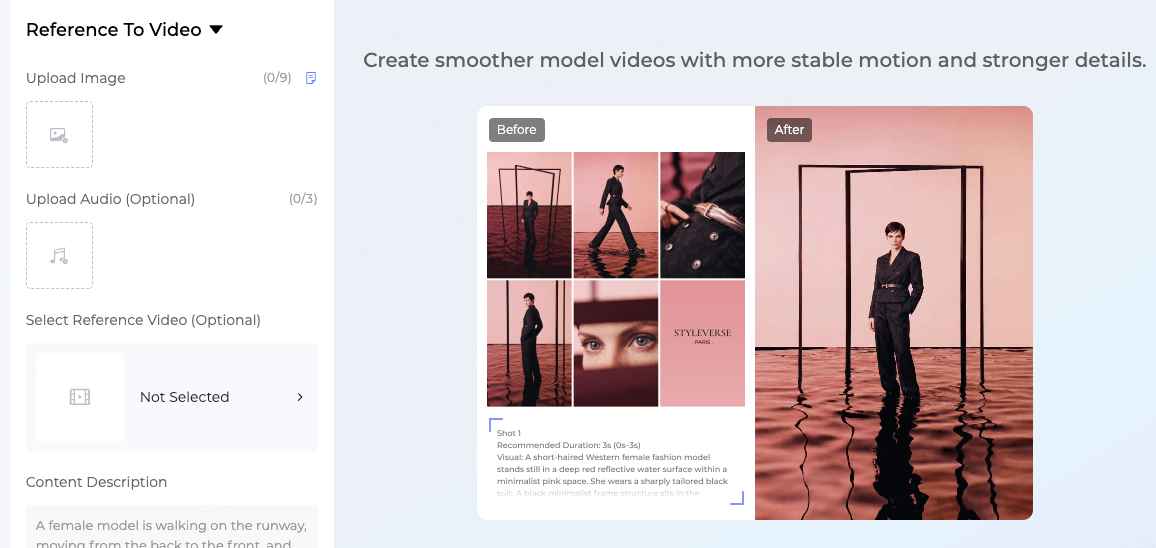
Style3D AI's Style to Video tool transforms static 2D fashion images into dynamic 15-second marketing clips for TikTok and Reels. Start with free generations: upload a garment design from InnoStyle, apply Style Pose for variety, then generate animated runway videos—eliminating photoshoots and saving 80% on costs for brands and designers. Check: Production-ready Visuals What Is an AI Fashion Video Generator and Why Do Brands Need One? An AI fashion video generator converts static 2D garment i