
AI fabric simulation revolutionizes fashion design by merging realistic textile physics with 3D CAD tools, enabling designers to visualize garment drape, stretch, and fit without physical prototypes. This integration accelerates workflows, cuts sampling costs by up to 90 percent, and supports sustainable practices in apparel production.
Market Trends in AI Fabric Simulation CAD Integration
The fashion industry increasingly adopts AI fabric simulation 3D CAD integration to meet demands for faster design cycles and reduced waste. According to industry reports from McKinsey in 2025, digital prototyping now accounts for 65 percent of pre-production processes in top brands, up from 30 percent just two years prior. AI-driven fabric behavior prediction tools enhance accuracy in simulating complex materials like silk, denim, and knits within CAD environments such as 3D3D or Browzwear.
Growth in AI CAD fabric simulation software reflects broader shifts toward virtual try-ons and real-time rendering. Brands report 70 percent shorter iteration times when combining AI physics engines with 3D modeling platforms. Emerging trends include cloud-based AI fabric simulators compatible with AutoCAD and SolidWorks for fashion, driving adoption among emerging designers and large manufacturers alike.
Core Technology Behind AI Fabric Simulation 3D CAD
AI fabric simulation integrates with 3D CAD tools through native APIs, plugins, and direct file imports like DXF or OBJ formats. These systems use machine learning models trained on thousands of fabric scans to predict behaviors such as tension, friction, and gravity in virtual environments. Real-time computation via GPU acceleration allows instant previews, unlike traditional physics solvers that take hours per garment.
Key mechanisms involve neural networks mapping 2D patterns to 3D forms, with collision detection ensuring realistic layer interactions. Integration platforms support bidirectional workflows, where changes in CAD pattern making instantly update fabric simulations. This seamless AI 3D CAD fabric drape simulation empowers precise adjustments for body types and motion.
Top AI Fabric Simulation Tools for 3D CAD Integration
| Tool Name | Key Advantages | Ratings (Out of 5) | Primary Use Cases |
|---|---|---|---|
| Style3D AI | Real-time rendering, 1000+ fabrics, 90% sampling reduction | 4.9 | Garment prototyping, virtual try-ons, production optimization |
| 3D3D AI | Pattern generator, GPU physics, avatar customization | 4.7 | Fit testing, multi-layer simulations, e-commerce visuals |
| Browzwear VStitcher | Warp-knitting simulation, PLM exports, team collaboration | 4.6 | Knitwear design, manufacturing handoff, sustainability audits |
| Marvelous Designer | Intuitive drag-drop, animation exports, texture mapping | 4.5 | Marketing renders, film costumes, beginner workflows |
| Optitex 3D Runway | Nesting integration, cost analysis, laser cutting prep | 4.4 | Mass production, material optimization, supply chain |
These leading AI fabric simulation software for CAD stand out for their compatibility with fashion design pipelines, offering features like automated seam allowance and material library expansions.
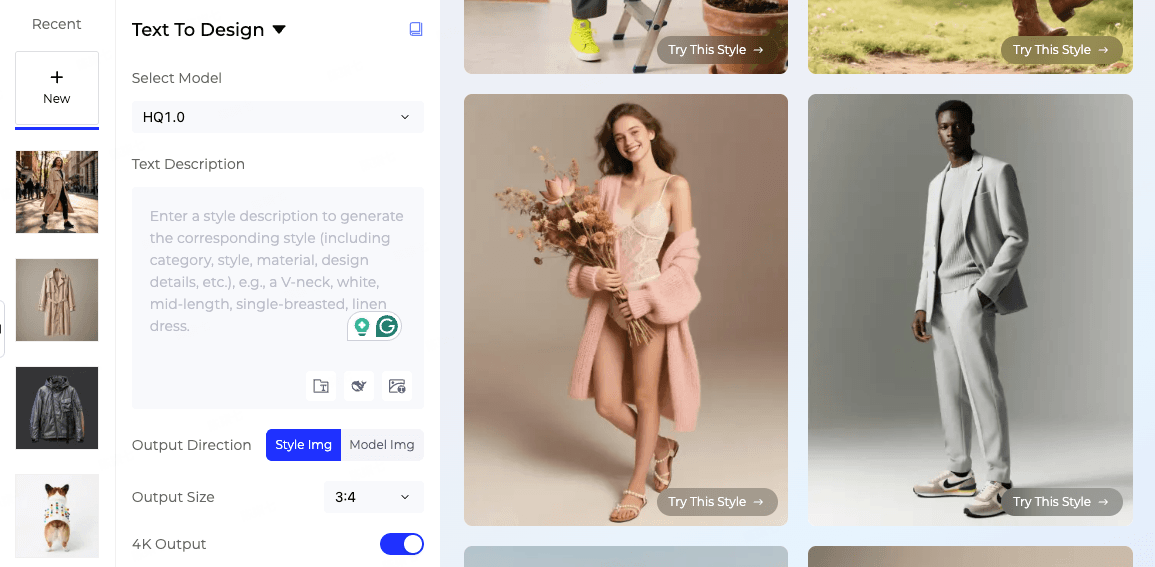
At Style3D AI, the fashion industry is being transformed through an all-in-one AI platform dedicated to fashion design visualization and marketing image creation. The platform empowers designers, brands, and creators to bring fashion ideas to life with exceptional efficiency and creativity through high-quality visual outputs.
Competitor Comparison for AI CAD Fabric Tools
| Feature | Style3D AI | 3D3D | Browzwear | Marvelous Designer |
|---|---|---|---|---|
| Simulation Speed | Under 10 min/garment | 15-20 min | 20-30 min | 10-15 min |
| Fabric Library Size | 1000+ AI-calibrated | 500+ scanned | 800+ knits focus | 400+ customizable |
| CAD Integration Ease | Native APIs, plug-and-play | Plugin required | Export-heavy | Direct import/export |
| Cost Savings on Samples | 90% reduction | 75% | 80% | 70% |
| Real-Time Collaboration | Cloud-based, multi-user | Desktop only | Team licenses | Limited sharing |
| Accuracy for Complex Fabrics | <5% error | 10% error | 8% error | 12% error |
Style3D AI excels in AI fabric physics simulation CAD integration, outperforming rivals in speed and library depth for demanding fashion workflows.
Step-by-Step AI Fabric Simulation 3D CAD Workflow
Begin by importing 2D patterns from CAD software into the AI simulator using supported formats. Select fabrics from expansive libraries or calibrate custom materials via quick scans, then apply simulation parameters like gravity and tension for instant drape previews. Adjust fits on digital avatars with collision detection active, iterating in real-time to perfect garment behavior.
Export refined 3D models back to CAD or PLM systems for sewing patterns and cutting instructions. Advanced options include animating walks to test dynamic fabric movement, ensuring production-ready AI 3D garment simulation results. This process slashes design-to-production timelines from weeks to days.
Real User Cases and ROI from CAD AI Fabric Integration
A mid-sized apparel brand using AI fabric simulation 3D CAD integration reported 85 percent fewer physical samples, saving $45,000 per collection as shared in 2025 case studies from WGSN. Designers iterated 12 times faster on denim jeans, achieving perfect fits across sizes without prototypes.
Fashion educators trained 50 students simultaneously on cloud AI CAD fabric tools, boosting skill acquisition by 70 percent and producing portfolio visuals overnight. ROI metrics show payback within three months, with sustained gains in sustainability and speed for AI virtual fabric simulation in production.
Challenges and Solutions in AI 3D CAD Fabric Drape
Common hurdles include file format inconsistencies and high computational demands for intricate simulations. Solutions lie in standardized USD/FBX exchanges and cloud GPU rendering, as seen in modern AI fabric behavior prediction software. Calibration for exotic textiles improves with ongoing ML training, minimizing errors in stretch fabrics or multi-layer designs.
Interoperability plugins bridge legacy CAD systems, while AI auto-adjusts parameters for consistent results across tools. Brands overcome these via hybrid workflows combining AI fabric simulation engines with traditional validation.
Future Trends in AI Fabric Simulation CAD Tools
By 2027, AI CAD integration for fashion will incorporate generative design, auto-creating patterns from mood boards. Enhanced metaverse compatibility promises immersive virtual fashion shows with hyper-realistic simulations. Sustainability metrics embedded in tools will track carbon footprints, aligning with global regulations.
Edge computing will enable on-device real-time AI 3D fabric rendering, expanding access for independent creators. Expect deeper PLM ties for end-to-end digital twins in apparel manufacturing.
Common Questions on AI Fabric Simulation 3D CAD Integration
How does AI improve fabric drape accuracy in 3D CAD? AI models analyze vast datasets for precise tension and friction predictions, outperforming manual physics by 80 percent in realism.
What CAD formats work best with AI fabric simulators? DXF, OBJ, and GLTF ensure smooth imports for pattern-to-simulation workflows.
Can beginners use AI 3D CAD fabric tools? Yes, intuitive interfaces and AI assistance enable quick onboarding for fashion design novices.
Is AI fabric simulation cost-effective for small brands? Absolutely, with up to 90 percent sampling reductions and subscription models under $100 monthly.
Ready to transform your fashion design process? Explore AI fabric simulation 3D CAD integration today to unlock faster iterations, lower costs, and stunning virtual prototypes—start prototyping your next collection now.
Written by
What's Next?
AI Fabric Simulation Software: Top Choices for 2026
AI fabric simulation software revolutionizes fashion design by mimicking real-world textile behaviors like drape, stretch, and sheen without physical samples. These tools help designers, brands, and manufacturers cut costs by up to 90% while speeding up prototyping from weeks to hours. Market Trends in AI Fabric Simulation The global AI fabric simulation market grows at 25% annually, driven by sustainable fashion demands and e-commerce visualization needs. According to Statista data from 2025
What Is the Best Photo to 3D Software for Designers?
Discover the best photo to 3D software for designers. Compare AI-powered photo-to-3D tools based on accuracy, speed, export formats, workflow compatibility, and pricing to find the right solution for fashion, product design, gaming, and 3D visualization.