
Most arguments about lifestyle vs studio product photos are framed as taste. One camp likes clean white backgrounds, the other likes rooms and bodies and light. The framing is wrong, and it produces bad listings in both directions: sets that are compliant but dead, and sets that are beautiful but untrusted.
The better framing is job assignment. Every image on a listing holds exactly one of two jobs — proving what the item is, or showing what life with it looks like. Read a listing that way and the context shot vs white background question stops being about taste: it becomes a question of which job each frame was hired to do, and whether it is doing it.
Two Jobs, Not One
A compliance photo answers "what is it." Its loyalty is to the garment as it actually exists: the color, the shape, the closures, the scope of what ships. It answers to the platform's image rules and to the buyer's verification instinct, and it succeeds when both accept it without a second look.
A persuasion photo answers "why would I want it." Its loyalty is to the life the buyer is imagining: where the garment is worn, with what, on whom, doing what. It answers to desire, and it succeeds when the buyer starts picturing ownership instead of inspecting merchandise.
Compliance photo | Persuasion photo | |
Question it answers | What is it, exactly? | Why would I want it? |
The test it must pass | A buyer or a platform reviewer can verify the product from it | A buyer can picture owning and using the product from it |
What failure looks like | Rejection, suppressed listing, or a buyer who still cannot tell what the item is | A clean, attractive image that answers nothing |
Before judging any image — in a shoot plan, a retouch queue, or a listing audit — ask which job it holds. Most image problems are assignment problems: a frame being graded against a job it never took.
What Compliance Photos Owe
The compliance side carries the truthfulness obligations, and they are stricter than "a clear photo." The garment must be fully in frame, because a cropped product cannot be verified and reads as concealment. Color must be accurate, because color is a product attribute, not a mood — a buyer who orders what the photo showed and receives something else has been misinformed, and the return will say so. Nothing in the frame may create ambiguity about scope: props that could be mistaken for included items, styling that hides a closure, or a second garment that obscures the first all fail the same way: they make "what is it" unanswerable.
On marketplaces, the main image carries an added layer: explicit platform rules about background, framing, and what may appear in the first slot. Those rules differ by platform and change over time, so verify the current rules on each platform you sell on rather than memorizing a spec — a fixed number quoted in an article is stale somewhere.
What compliance photos do not owe is charm. A compliant frame can be flat, evenly lit, and visually uneventful, and still be doing its entire job. Judging it by persuasion standards — "it looks boring" — is how teams talk themselves into breaking the verification layer.
What Persuasion Photos Owe
The persuasion side owes the buyer a life to step into. In practice that means four kinds of evidence:
• Context: the garment in the setting it was bought for, so the buyer can place it in their own routine.
• Body: the garment on a person, so proportion, drape, and fit intent become visible rather than guessed.
• Pairing: the garment styled with other pieces, so the buyer sees how it works inside a wardrobe instead of in isolation.
• In-use detail: the cuff pushed up, the bag worn crossbody, the hood actually up — the garment behaving, not posing.
The failure mode on this side is quieter than a platform rejection. A persuasion photo fails when it is clean and answers nothing: the garment placed in a handsome room that has nothing to do with how it is worn, or a lifestyle frame so loosely styled that the product itself becomes decor. The test is the same as on the compliance side — name the question the image answers. If the honest answer is "none, but it looks good," the frame is decoration, and decoration does not hold a job.
Why One Frame Cannot Do Both
The two jobs make conflicting demands on the same three decisions, which is why combining them fails mechanically rather than aesthetically.
Lighting pulls in opposite directions. Verification wants flat, even light that hides nothing and shifts no color; persuasion wants directional light with shadow and atmosphere, which by definition hides and reshapes. Composition conflicts the same way. Compliance wants the garment complete and centered with nothing competing for the frame; persuasion wants cropping, layering, and a scene the garment is part of rather than the whole of. Retouching splits deepest. On the compliance side, the product's attributes are untouchable — color, shape, hardware, and surface may not be adjusted, only the dust and wrinkles that were never part of the product. On the persuasion side, the context is fair game: backgrounds can be rebuilt, props swapped, grading pushed. The garment still cannot be flattered into a different garment, but everything around it can be constructed.
A frame that tries to hold both jobs ends up lit too flat to persuade and too styled to verify, cropped too tight to prove scope and too loose to create desire. One frame, one job is not a purist's rule. It is the only assignment under which either job can actually be completed.
Assigning the Jobs Across a Listing
Once every frame holds one job, the listing becomes a staffing problem: which slots carry compliance, which carry persuasion, and in what order.
The count of slots comes first as a constraint, and it is settled elsewhere — how many slots a listing needs falls out of the buyer questions the listing must answer. This article's question is the next one: given those slots, which job does each one hold.
The main image almost always belongs to compliance. On marketplaces the rules require it; everywhere else, the first frame is where verification happens, because a buyer who cannot confirm what the item is will not stay to be persuaded. From there, order follows the buyer's sequence: verify first, imagine second. Compliance frames — the full set of angles and the close-ups that prove construction — come early, and persuasion frames carry the back of the rail, where a satisfied verifier is ready to picture ownership.
Capture method sits underneath the assignment, not above it. The choice between flat lay, ghost mannequin, or on-model is a choice about what each technique can show, and either side can use any of them. An on-model shot with even light, full garment in frame, and no styling noise is doing compliance work — it proves fit and proportion. A flat lay arranged as an outfit grid with supporting pieces is doing persuasion work — it answers "what would I wear this with." The label follows the question the image answers, never the technique that produced it.
Retouching rules follow the same assignment, which is why the split has to be settled before the retouch queue, not inside it:
• Compliance frames pass through with product attributes frozen; only non-product artifacts may be corrected.
• Persuasion frames may have their context adjusted — background, props, grading — while the garment itself stays untouched.
• A frame whose job was never assigned gets retouched inconsistently, because the retoucher is forced to guess which rules apply.
Where Generation Sits on Each Side
Generation is not neutral between the two jobs; it sits comfortably on one side and dangerously on the other.
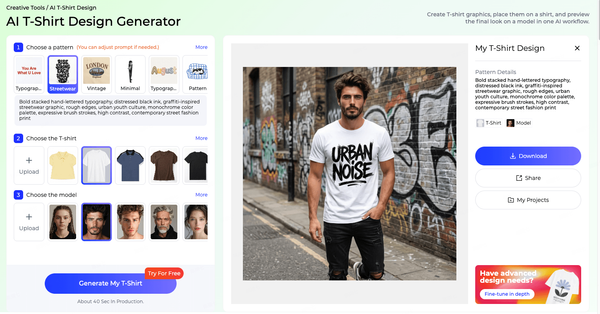
The persuasion side is the natural fit, because its context is allowed to be constructed. A room that was never rented and a model who was never booked are legitimate tools for showing the life around the garment, provided the garment itself stays accurate. This is where a model photoshoot workflow belongs: take an existing garment image and generate model and setting variants with Style3D AI for the persuasion slots, instead of reshooting every context.
The compliance side is the opposite case, and it belongs in its own paragraph because the boundary is absolute. In a compliance frame, the product's attributes — color, shape, closures, texture, scope — may not be generated, inferred, or improved. Anything a buyer is entitled to verify must come from the physical garment or from a photograph of it. Generation that touches product attributes on the compliance side is not an efficiency; it is a misrepresentation with good lighting, and it converts directly into disputes and returns. Generating the unseen back of a garment from its front is the canonical example: the back may carry closures or print placement that does not exist in the source, and presenting an invented back as fact breaks the truthfulness obligation the frame was hired to keep.
The practical rule: generation may build the world around the product, and may never rebuild the product.
FAQ
Can one image do both jobs at once?
No, and the reason is mechanical, not stylistic. Verification and persuasion demand opposite lighting, opposite composition, and opposite retouching rules, so a frame attempting both completes neither. The closest legitimate case is a persuasion frame that is also accurate — but accuracy is a floor for every image, not a second job.
Does the main image always belong to the compliance side?
On marketplaces, effectively yes, because main-image rules are written for verification — check the current rules on each platform. On your own store you have more freedom, but the first frame is still where buyers confirm what the item is, so assigning it to persuasion trades away trust at the exact moment it is being formed.
Does A+ content or a brand storefront change the split?
It expands the persuasion side without removing the compliance side. Enhanced content modules give you more room for context, comparison, and story, but the core image rail still carries the verification duty, and the product attributes shown anywhere on the page still have to be true.
Which side does video belong to?
Both, and it should be assigned the same way frames are. A spin or detail video that shows construction and movement is compliance work in motion; a styled clip in a setting is persuasion. The one-job rule still applies per asset.
How many images does each side need?
There is no fixed ratio worth borrowing. The compliance side must cover every verifiable attribute of "what it is" — all the angles and details a buyer can check. The persuasion side must cover the contexts the buyer is imagining ownership in. Build both lists from your own reviews and return reasons, and let the counts fall out.
Which side do detail shots belong to?
Ask what the close-up is doing. A macro of the zipper, stitching, or fabric surface is evidence — it lets the buyer verify construction, so it holds the compliance job and follows compliance retouching rules. A close-up of the garment in use, styled and lit for mood, is persuasion. The same camera distance can hold either job, which is exactly why the label comes from the question being answered.
Where this leaves you
Stop grading images by how they look and start grading them by which job they hold. Every frame either proves what the item is or shows why it is worth wanting, and a frame attempting both completes neither. The split then does your planning for you: it sets the retouching rules per slot, it tells you which side of the listing generation may touch, and it explains why the white-background-versus-context debate was never about taste. One frame, one job — and the listing stops arguing with itself.
Assign One Job to Every Frame You Publish
Audit one live listing today: label each image with the question it answers and the job it holds, then move any frame carrying two jobs back to one. Check the compliance frames against the current main-image rules of each platform you sell on. Where the persuasion side is thin, fill it with model and setting variants instead of booking a reshoot, and keep generation away from anything a buyer is entitled to verify.
Written by