
A bridal listing is not browsed; it is interrogated. The buyer arriving at it has usually already decided the gown is beautiful — the thumbnail settled that. What she has not decided is whether the gown will fit her body, on one specific day, with no option to wear it a second time and recover the money. She cannot ask the dress those questions in person, so she asks the photographs, frame by frame.
That reading habit makes on-model photography a different discipline in bridal than anywhere else in apparel. In most categories a photo set is persuasion: make the garment desirable. In bridal the photo set is evidence: prove the garment will behave on a body. This article is the frame inventory for that proof — the specific on-model frames bridal buyers check, and the exact fit question each one answers.
Bridal buyers read photos as fit evidence
Three properties separate a bridal purchase from an ordinary dress purchase. The garment is worn once, so there is no "it will grow on me." The price sits far above a buyer's normal apparel spend, so the cost of being wrong is high. And the decision carries an emotional charge, so the buyer works harder to de-risk it — she reads more frames, zooms deeper, and stays longer than she would on any other listing in your catalog.
She is also buying into an alteration culture. Most wedding dresses are expected to be tailored after purchase, which changes what the buyer needs from photos: not just "does this fit the model," but "what would a seamstress have to change for this to fit me." Every frame gets read for both questions at once.
The practical consequence: each on-model frame functions as an answer to a question the buyer cannot ask out loud. Where does the bodice edge sit against skin? Where does the waist seam actually fall? How does the skirt release, front and back? How long is the hem against the floor? What does the lace look like from across the room versus across the table? A listing that answers these questions earns the fitting appointment. A listing that skips them does not get a neutral reading — the buyer fills the gap with an assumption, and assumptions in bridal end as returns or alteration surprises.
The bodice frame: edge against the body
The bodice is where the gown meets skin, and it is the first frame buyers zoom into. What they are checking is contact: does the top edge of a strapless neckline sit flush against the chest, or is there a visible gap? Does the edge at the underarm dig, float, or lie flat? Does the boning line show through the fabric, and where does it end?
These details carry a fit verdict. A gaping top edge means the bodice does not grip — either the size is wrong for that body or the internal structure is not doing its job, and neither is a cheap fix. An edge that lies flush at rest tells the buyer the bodice is engineered to stay put, which is the single thing she most needs to believe about a strapless or off-shoulder gown before she will book a fitting.
The frame that proves this is specific: straight-on or near straight-on, waist-up or full torso, arms held slightly away from the body so the underarm edge is visible. A three-quarter angle with crossed arms is the prettiest shot in the set and answers nothing, because it hides the exact edges the buyer came to inspect.
The waist frame: where the seam actually sits
Waist placement is a proportion question. Natural waist, dropped waist, empire, basque — each puts the seam at a different height, and the buyer maps that height onto her own torso to predict how the gown will divide her body. She is not judging the seam itself; she is judging where she will look long or short in the dress.
That mapping requires the frame to tell the truth about level. The seam must be readable against fixed anatomical references — the ribcage, the navel, the hip bone — which means the shot has to be straight-on, full torso, with no arm, sash, or bouquet crossing the waistline. A gown photographed at a flattering angle can shift the apparent seam height by a hand-width, and the buyer who orders on that reading discovers the real level only when the box opens.
This is also the frame where alteration expectations form. Moving a waist seam is structural surgery; hemming is routine. A buyer who can see exactly where the seam sits can ask her tailor a precise question before she buys, and the listing that lets her ask it converts a nervous browser into a scheduled appointment.
The skirt frames: front drape, back view, and train behavior
The skirt is not one frame; it is three, because a skirt behaves differently in each direction of view.
• The front frame shows how the fabric falls from waist and hip — whether an A-line opens immediately or clings first, whether a sheath follows the thigh, whether pleats open flat or collapse inward.
• The back frame shows how the skirt releases over the seat and where the closure lives — zipper, button row, or lace-up — because the closure is both a fit mechanism and the buyer's future alteration path.
• The train frame shows the gown at rest from behind or the side, with the train fully extended, so the buyer can judge its length against the model's legs rather than against her imagination.
Silhouette names do this work poorly. Two gowns labeled A-line can release at entirely different points, and the buyer cannot feel the difference from a tag — she has to see where the fabric leaves the body. A listing that shows only the front three-quarter view has answered one of the skirt's three questions and left the two she cannot guess.
The hem-to-floor frame
Length is the bridal question with the most variables: the buyer's height, her heel, the venue floor, and whether she wants the hem to kiss the ground, break on the shoe, or puddle deliberately. None of that can be judged from a frame cropped above the floor.
The frame that answers it is unglamorous: full length, standing naturally, feet and floor both in shot, with the model's height stated next to it. With those references the buyer can do her own arithmetic — the model is this tall, the hem sits here, I am that tall in these heels, so the gown will land roughly there. Without them, "floor length" is a phrase, not a measurement.
This frame also sets the most common alteration expectation in bridal. Nearly every gown gets hemmed, and a buyer who can see how much fabric pools on the model arrives at her fitting with a realistic brief instead of a surprise. Crop the floor out and the question does not disappear — it gets answered later, expensively, at the alteration appointment.
The detail frame: scale at distance versus close-up
Bridal fabrics carry their value in details — lace motifs, beading, embroidery, applique — and details have a scale problem: they read one way from across a room and another from arm's length. A motif that looks delicate in a close-up can read as a dense pattern at full-body distance; scattered beading that sparkles in a macro shot can vanish entirely at aisle distance.
Buyers reconcile the two scales instinctively, because they are buying both experiences of the dress — how it reads at the ceremony and how it reads across the reception table. A listing that offers only close-ups leaves the distance reading unknown, and a listing that offers only full-length shots leaves the craftsmanship unverifiable.
The fix is pairing, not volume. Every detail close-up should have a distance frame that contains it, shot wide enough that the buyer can locate the detail on the gown and judge its true scale. One pair teaches more than a dozen unmoored macros, because the pair carries the relationship — this is the beadwork, and this is what the beadwork does to the dress.
What missing frames turn into
Here is the whole argument in one line: a missing frame never stays blank. The buyer fills it with the most flattering assumption she can defend, orders on that assumption, and meets the truth at the fitting. From the seller's side, that gap surfaces as a return, an alteration dispute, or a review that says "nothing like the photos."
Missing frame | Assumption that fills it | Where it lands |
Bodice edge | The neckline will grip my chest | Return citing fit, or an expensive bodice rebuild |
Waist level | The seam sits where I expect on my torso | Proportion disappointment at the fitting |
Back and closure | The closure will be easy to alter | Alteration cost shock when the expected lace-up is a zipper |
Hem to floor | Floor length means my floor | A hem job priced like a rebuild |
Detail at distance | The lace reads like the macro shot | A "nothing like the photos" review |
How many frames does that make in total? There is no universal number — the count comes from the questions, not from a quota. The working method is the same one used for how many product images a listing actually needs: inventory the buyer's questions, then shoot one frame per answer.
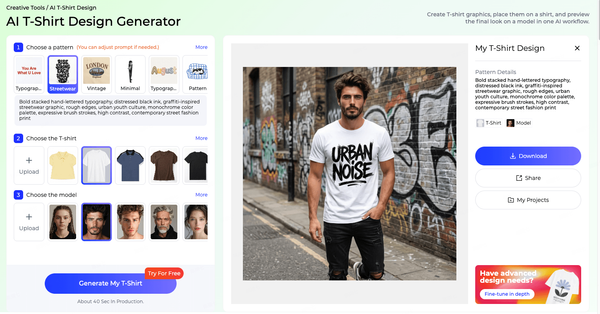
The production reality is that most missing frames were never shot, not rejected — the live session ran out of time, or the sample only ever existed on one body. Closing those gaps no longer requires a second shoot day: a model photoshoot workflow such as Style3D AI generates additional poses and model bodies from existing gown images, which is how a frame set gets completed when a reshoot is not an option. Whichever route fills the gap, the acceptance test is the checklist above — count the unanswered questions, not the photos.
FAQ
What is the minimum number of on-model frames a bridal listing needs?
There is no honest universal count, because the floor is set by questions, not quantity. The frame inventory above — bodice edge, waist level, skirt front, back with closure, hem to floor, and a paired detail frame — is the practical minimum for a structured gown. Simpler, unstructured dresses can need fewer; anything with a train needs more.
Can flat lay photos replace on-model frames?
No, because the two genres answer different questions. A flat lay documents construction, fabric, and detail honestly, but it cannot show how an edge grips skin, where a seam sits on a torso, or how a skirt releases over a hip. Flat lays complement the on-model set; they cannot substitute for fit evidence.
Which part of the dress do buyers zoom in on most?
The bodice top edge and the waist seam. Both are where fit succeeds or fails visibly, and both are where an alteration stops being routine and becomes structural. Buyers zoom there because that is where their money is at risk.
Does a back-view photo really affect whether a gown sells?
Yes, because the back carries information the front cannot: the closure type, the skirt release, and the train. A buyer deciding between two comparable gowns reads the missing back view as a missing answer, and the listing with the complete frame set is the one she trusts with a deposit.
Can virtual try-on images replace on-model frames?
They do a different job, not the same one. Virtual try-on for bridal answers the buyer's personal proportion question — this gown on my body. On-model frames answer the garment's construction questions — how this bodice grips, where this seam sits, how this hem falls. A strong listing carries both.
Do I need the gown photographed on more than one body type?
Whenever the buyer base spans more than one body type, yes. Bodice edge behavior, waist seam level, and skirt release all change with the body wearing them, and a frame set shot on one figure answers one buyer's questions precisely and everyone else's approximately. A second body answers a second buyer's questions precisely instead of approximately.
Where this leaves you
Bridal buyers do not look at on-model photos; they read them, one fit question per frame. The bodice edge, the waist seam, the skirt in three directions, the hem against the floor, the detail at two distances — each frame is evidence, and each missing frame is an assumption that later becomes a return or an alteration surprise. So audit your listings the way your buyers read them: count the questions your frame set leaves unanswered. That count, not your photo count, is the distance between a listing that earns the fitting and one that earns the refund.
Complete the Frame Set Before the Listing Goes Live
Take one gown from your live catalog and walk it against the frame inventory above: bodice edge, waist seam, skirt front and back, train, hem to floor, detail at both distances. Mark every frame your listing lacks and write down the buyer question it leaves open. Then produce the missing frames — by reshoot where you can, by a model photoshoot workflow where you cannot — and put the model's height next to the hem frame. Relist, and run the same audit on the next gown.
Written by