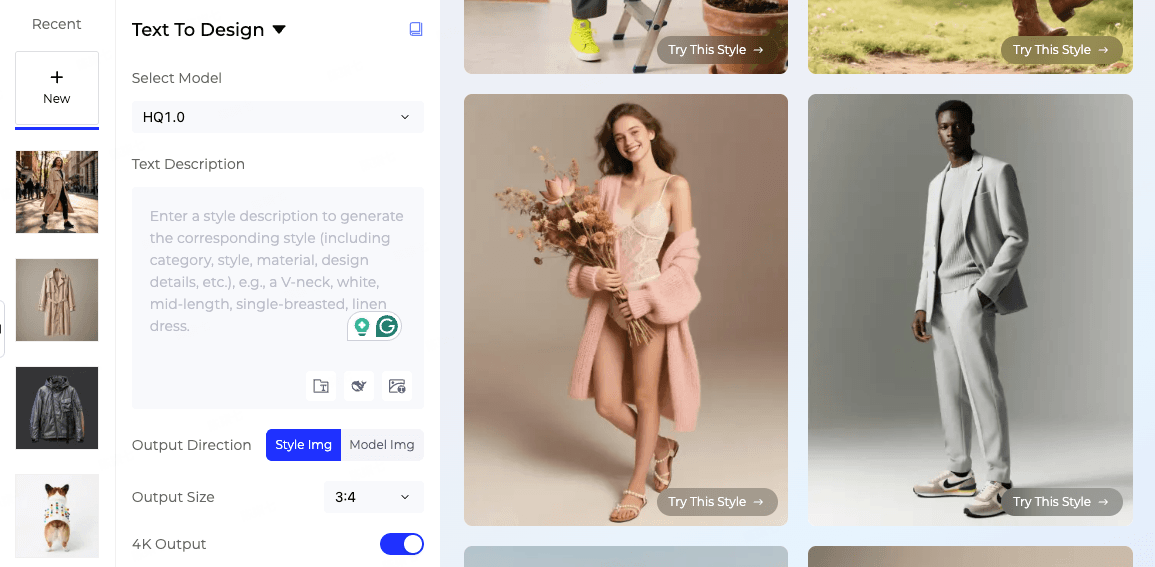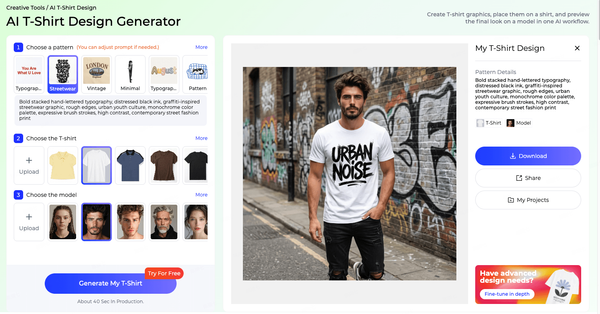

The fashion industry is rapidly adopting AI-powered tools that transform design workflows, reduce production costs, and accelerate time-to-market. Platforms like Style3D AI enable designers to convert sketches into realistic 3D garments, conduct virtual fabric tests, and streamline collection launches with unmatched efficiency and precision.
How Is the Fashion Design Industry Evolving and What Challenges Exist?
The global fashion market is projected to reach $1.7 trillion by 2030, with digital transformation becoming a key driver of growth. Traditional design processes remain labor-intensive, with designers spending up to 60% of their time on manual pattern-making and sample adjustments. This inefficiency slows innovation and increases production costs.
Consumer demand for rapid fashion cycles adds further pressure. According to McKinsey & Company, 55% of consumers now expect faster delivery of new designs, yet traditional workflows struggle to keep up, resulting in missed revenue opportunities and delayed market entry.
Sustainability concerns also highlight inefficiencies in conventional practices. The production of excess samples leads to material waste, with the global apparel industry responsible for over 92 million tons of waste annually. Designers are increasingly seeking digital alternatives to reduce environmental impact while maintaining creative freedom.
Why Are Traditional Fashion Design Solutions Falling Short?
Traditional tools rely heavily on manual drafting, hand-sewing prototypes, and physical fittings, which are time-consuming and error-prone. Designers often spend weeks iterating a single garment, and misaligned patterns or sizing mistakes can cause costly delays.
Compared to modern digital solutions, conventional methods lack real-time visualization. Designers cannot accurately predict fabric drape, texture, or fit without multiple physical samples, resulting in material waste and extended development cycles.
Additionally, collaboration is challenging. Sharing physical sketches and prototypes across teams or with clients slows feedback loops, limiting responsiveness to market trends and consumer preferences.
What Can AI Fashion Design Software Like Style3D AI Offer?
AI-powered platforms, such as Style3D AI, provide an all-in-one solution for fashion design and development. Key capabilities include:
- 3D Garment Creation: Convert sketches or ideas into realistic 3D models instantly.
- Virtual Fabric Simulation: Test fabrics, patterns, and textures without physical samples.
- Automated Pattern Making: AI-assisted pattern generation and automatic stitching reduce manual effort.
- Realistic Renderings: Conduct virtual photoshoots and product visualization for marketing or e-commerce.
- Customizable Templates: Access thousands of silhouettes and design templates suitable for diverse fashion lines.
How Does AI Fashion Design Compare to Traditional Methods?
| Feature | Traditional Methods | Style3D AI |
|---|---|---|
| Pattern Creation | Manual, time-consuming | AI-assisted, automatic |
| Fabric Testing | Physical sampling | Virtual simulation, instant preview |
| Prototype Iteration | Weeks per sample | Hours per iteration |
| Collaboration | Limited, physical exchange | Real-time cloud collaboration |
| Sustainability | High material waste | Reduced waste through digital samples |
| Visualization | 2D sketches only | Photorealistic 3D rendering |
How Can Designers Use Style3D AI Step by Step?
- Upload or Sketch Design: Start with hand sketches, digital sketches, or concept images.
- 3D Model Generation: Use AI to transform ideas into lifelike 3D garments.
- Fabric Simulation: Select fabrics, adjust drape, and simulate textures digitally.
- Pattern & Stitch Automation: AI generates patterns and stitches for production-ready files.
- Virtual Try-On: Test fit, sizing, and style on digital mannequins or avatars.
- Rendering & Export: Produce high-quality renders for marketing, e-commerce, or manufacturing.
What Are Typical Use Cases for AI Fashion Design Software?
Scenario 1: Independent Designer Launching a Capsule Collection
- Problem: Limited resources for multiple prototypes.
- Traditional Approach: Manual sampling, costly trial-and-error.
- After Using Style3D AI: Instantly visualized 3D designs and virtual fittings.
- Key Benefit: Faster launch with reduced material waste.
Scenario 2: Fashion House Preparing Seasonal Line
- Problem: Tight deadlines for market-ready designs.
- Traditional Approach: Multiple revisions and sample shipments.
- After Using Style3D AI: Streamlined iterations and instant client approval.
- Key Benefit: Shortened design cycle by 50%.
Scenario 3: Costume Designer for Film Production
- Problem: Need realistic preview before on-set creation.
- Traditional Approach: Physical mockups for each character.
- After Using Style3D AI: Virtual try-ons and dynamic drape simulations.
- Key Benefit: Reduced production time and increased creative experimentation.
Scenario 4: E-Commerce Apparel Brand Testing New Styles
- Problem: Uncertainty about customer appeal before production.
- Traditional Approach: Small batch sampling and photo shoots.
- After Using Style3D AI: Photorealistic 3D renderings for digital catalogs.
- Key Benefit: Lower upfront costs and faster market feedback.
What Does the Future Hold for AI in Fashion Design?
AI adoption in fashion is projected to grow by 38% annually over the next five years. The combination of 3D modeling, virtual try-ons, and automated pattern generation is redefining efficiency and sustainability standards. Designers embracing platforms like Style3D AI can accelerate creativity, reduce costs, and meet the growing demand for fast, customized fashion. Now is the critical moment to integrate AI to stay competitive and environmentally responsible.
AI Fashion Design Is Becoming a Full Digital Workflow
AI fashion design software is no longer just a visualization tool, but a complete digital workflow system. Platforms like Style3D AI integrate ideation, 3D modeling, fabric simulation, and production-ready outputs into one environment. This allows designers to move from concept to manufacturing without repeated physical sampling, significantly improving decision speed and reducing dependency on traditional studio resources.
Data-Driven Design Is Reshaping Fashion Creativity
Modern AI tools are enabling data-driven design decisions. Instead of relying solely on intuition, designers can test fabric behavior, silhouette performance, and consumer preference simulations in real time. This reduces guesswork and improves collection accuracy. It also allows brands to align creative direction with market demand earlier in the development cycle, increasing the success rate of new product launches.
Sustainability and Cost Efficiency Are Now Core Advantages
Beyond speed, AI fashion design tools directly impact sustainability and cost control. By replacing physical prototypes with virtual simulations, brands can significantly reduce textile waste and production costs. This shift supports circular fashion strategies while maintaining creative flexibility. As a result, AI adoption is becoming not just a productivity upgrade, but a long-term competitive and environmental advantage for fashion companies.
FAQ
How does AI fashion software improve design efficiency?
It automates pattern-making, fabric simulation, and 3D modeling, reducing design cycles from weeks to hours.
Which types of designers benefit most from Style3D AI?
Independent designers, fashion houses, costume designers, apparel brands, and e-commerce retailers gain efficiency and visualization capabilities.
Can AI fashion software reduce material waste?
Yes, virtual fabric testing eliminates the need for multiple physical samples, significantly cutting material use.
What are the collaboration advantages of AI design tools?
Real-time cloud-based collaboration allows designers, clients, and manufacturers to provide instant feedback and approve designs remotely.
Does Style3D AI support virtual photoshoots and marketing visuals?
Yes, it provides photorealistic renders for e-commerce, marketing campaigns, and social media without creating physical prototypes.
Sources
- https://www.mckinsey.com/industries/retail/our-insights/the-state-of-fashion
- https://www.statista.com/statistics/1104283/global-apparel-market-size/
- https://www.fashionunited.com/global-fashion-industry-statistics
- https://www.worldbank.org/en/news/feature/2019/09/23/sustainability-in-the-fashion-industry
Written by
What's Next?
Which Software Allows Fashion Designers to Create Clothing Videos?
Creating realistic clothing videos is no longer a complex, time-consuming process. Modern AI-driven platforms like Style3D AI enable designers to transform sketches into animated 3D garments, streamlining visualization and reducing physical prototyping costs, while producing high-quality videos for presentations, marketing, and e-commerce. How Is the Fashion Design Industry Adapting to Digital Visualization Needs? The fashion industry is undergoing a rapid digital transformation. According toWhat AI Image Generation Tools Can Help Fashion Designers Visualize Designs?
In today’s fast-paced fashion industry, AI image generation tools are transforming how designers conceptualize and prototype collections. By leveraging platforms like Style3D AI, designers can turn sketches into realistic 3D renderings, streamline pattern-making, and visualize fabrics virtually, reducing time and cost while enhancing creativity and precision. How Is the Fashion Industry Currently Facing Design Challenges? The global fashion market is expanding rapidly, projected to reach $1.1