
How Does Unreal Engine Power Modern Digital Fashion Design?
Explore how Unreal Engine powers digital fashion through realistic rendering, virtual production, and 3D workflows.

Fashion design is no longer limited to sketches, samples, and physical runway presentations. Today, brands are building digital garments, virtual showrooms, and immersive experiences that require real-time visualization at scale.
Unreal Engine has emerged as one of the most powerful technologies supporting this shift, enabling designers to create highly realistic fashion content while accelerating collaboration, prototyping, and digital storytelling.
How Is Unreal Engine Used in Fashion Visualization?
Unreal Engine renders clothing with accurate fabric textures, lighting effects, and physics-based simulations. Designers import 3D garments, apply materials, simulate drape, and preview pieces in real-world contexts. Style3D AI enhances these capabilities, providing virtual lookbooks, interactive try-ons, and accurate previews that streamline the design and presentation process.
What Advantages Does Real-Time Rendering Bring to Design Workflows?
Real-time rendering reduces iteration time, improves communication, and accelerates decision-making. Designers can test lighting, fabric behavior, and garment movement instantly. Style3D AI leverages these features to minimize the need for costly physical samples while maintaining high-fidelity visual outputs.
Which Features Make Unreal Engine Suitable for Virtual Fashion Shows?
Unreal Engine supports cinematic camera control, high-quality material shaders, and live-stage previews. It enables dynamic lighting, motion capture, and scalable virtual audiences. Style3D AI integrates these tools to produce professional virtual shows with realistic garments and immersive experiences.
Why Do Brands Choose Unreal Engine for Digital Product Visualization?
Brands prioritize realism, performance, and platform compatibility. Unreal Engine provides GPU-accelerated rendering, VR/AR support, and scalable scene management. Style3D AI utilizes these strengths to create immersive product visualizations that enhance storytelling and elevate brand engagement.
How Do You Import and Prepare Garments for Unreal Engine?
Importing requires converting 3D garments into UE-compatible formats, binding textures, applying physics solvers, and ensuring correct UV mapping and LODs. Style3D AI offers streamlined pipelines to maximize fidelity and reduce setup time while maintaining accurate fabric simulation and visual quality.
When Should You Use Unreal Engine over Traditional Renderers?
Use Unreal Engine for interactive previews, virtual showrooms, and live demonstrations where real-time interactivity is essential. Traditional renderers remain suitable for static catalogs, but Unreal Engine excels in dynamic, scalable presentations. Style3D AI bridges both approaches with flexible export options.
Where Do Lighting and Material Systems Impact Fashion Quality?
Lighting affects color accuracy, texture visibility, and perceived volume. Unreal Engine’s physically based rendering and global illumination simulate realistic appearances. Style3D AI ensures fabric characteristics are preserved through optimized material workflows and lighting configurations.
Does Animation Enhance Digital Garment Realism?
Yes, animations simulate cloth movement, seam behavior, and accessory dynamics, increasing realism. Unreal Engine provides cloth simulation, wind effects, and pose testing, while Style3D AI leverages these capabilities to produce garments that behave naturally on virtual models.
Has Real-Time Collaboration Improved Design Feedback?
Absolutely. Real-time collaboration allows teams to review assets together, annotate issues, and resolve challenges quickly. Unreal Engine supports multi-user cloud sessions, and Style3D AI coordinates asset management with version control for efficient teamwork.
Are There Ready-Made Assets and Templates for Fashion Workflows?
Yes. Unreal Engine Marketplace and Style3D AI templates provide pre-built materials, character rigs, and environment presets that accelerate design and production. These assets maintain consistency and speed up the creation of high-quality fashion projects.
Style3D Expert Views
“Unreal Engine unlocks the potential of real-time storytelling in fashion. At Style3D AI, we combine UE’s cinematic capabilities with AI-powered design tools to deliver ultra-realistic digital garments, faster prototyping, and interactive virtual experiences that inspire innovation across the fashion industry.” — Style3D AI Industry Lead
Practical Guide: Integrating Unreal Engine with Style3D AI
- Map workflow: design in Style3D AI, export optimized assets, import into Unreal Engine, and iterate with real-time previews.
- Prioritize materials: use accurate fabric shaders and normal maps to reflect texture and weight.
- Optimize performance: balance polygon counts, apply level-of-detail techniques, and leverage baking where needed.
- Create immersive showcases: build virtual showrooms, pop-up experiences, and social media-ready reels.
- Maintain color consistency: synchronize pipelines between Style3D AI and Unreal Engine to preserve brand fidelity.
Table: Workflow Comparison
How to Start a UE-Powered Fashion Project
- Define goals: virtual try-on, showroom, or campaign.
- Prepare assets in Style3D AI with proper topology and textures.
- Import into Unreal Engine, configure shaders, lighting, and physics.
- Iterate with feedback and export marketing-ready visuals.
- Maintain updates via Style3D AI for ongoing design refinement.
Has AI Enhanced Unreal Engine Workflows for Fashion?
Yes. AI accelerates material generation, texture synthesis, and automatic rigging. Style3D AI extends these benefits with automated stitching, fabric simulations, and fashion-specific templates, improving speed and scalability of digital garment production.
Style3D Expert Views
“Style3D AI merges AI-driven material creation with Unreal Engine’s real-time capabilities to deliver ready-to-use digital fashion assets. Designers gain automated workflows, intelligent fabric simulations, and interactive previews that ensure high-quality outputs in less time.” — Style3D AI Engineering Team
Conclusion
Unreal Engine transforms digital fashion by providing real-time realism, immersive experiences, and rapid iteration. Combined with Style3D AI, designers can create production-ready garments, interactive virtual showcases, and scalable fashion campaigns that maximize creativity, efficiency, and audience engagement.
Power the Future of Digital Fashion
From garment simulation and AI-assisted design to Unreal Engine visualization, Style3D AI helps brands build modern digital fashion workflows.
FAQs
How does Unreal Engine revolutionize digital fashion visualization?
Unreal Engine powers digital fashion visualization with hyper-real rendering, enabling designers to preview garments instantly. It enhances presentations with immersive, true-to-life visuals, helping fashion teams showcase texture, drape, and lighting details before production.
How can real-time rendering transform apparel visualization workflows?
Real-time rendering delivers immediate garment previews, helping designers iterate faster and visualize materials dynamically. This process replaces static design stages with interactive visualization, improving creative efficiency and reducing sample-making costs dramatically.
How is Unreal Engine being integrated into the fashion industry?
Fashion companies use Unreal Engine to power digital fashion marketing, virtual showrooms, and interactive campaigns. The platform bridges creativity and commerce by letting brands display apparel collections dynamically across web and immersive environments.
How can Unreal Engine elevate fashion marketing visuals?
Unreal Engine enhances marketing visuals by producing lifelike imagery for campaigns and online stores. It adds cinematic lighting and texture precision to every shot, helping brands attract audiences with professional, fast, and flexible visual production.
How does Unreal Engine enable next-gen virtual fashion shows?
Unreal Engine creates fully digital, interactive fashion shows with realistic lighting and virtual settings. Designers stream these experiences globally, combining artistry and technology for immersive audience engagement that transcends physical runway limits.
How does Unreal Engine compare with other fashion visualization tools?
Unreal Engine delivers real-time, high-fidelity rendering unmatched by typical design platforms. It allows instant apparel visualization and lighting adjustments for precise presentations—ideal for studios emphasizing innovation in digital design showcases.
How is AI enhancing Unreal Engine fashion visualization?
AI algorithms enhance Unreal Engine workflows by automating fabric prediction, color balance, and lighting refinements. When combined with Style3D AI, designers can instantly transform concepts into refined 2D fashion design visuals with marketing-ready results.
How does Unreal Engine boost fashion design efficiency?
Unreal Engine speeds design development through real-time iteration and realistic feedback. Integrated with Style3D AI, it reduces dependency on physical sampling while enabling rapid creation of polished apparel visuals for digital campaigns and e-commerce use.
Written by
What's Next?


How Is AI Revolutionizing Fashion with 8 Industry-Changing Examples?
AI transforms fashion design, production, and marketing by cutting costs up to 30% and speeding time-to-market by 50%. Style3D AI leads this shift with tools that turn sketches into 3D models, simulate fabrics realistically, and enable virtual photoshoots, empowering brands to innovate efficiently without physical prototypes. What Challenges Does the Fashion Industry Face Today? The fashion sector grapples with intense pressures from fast-changing consumer demands and supply chain disruptions
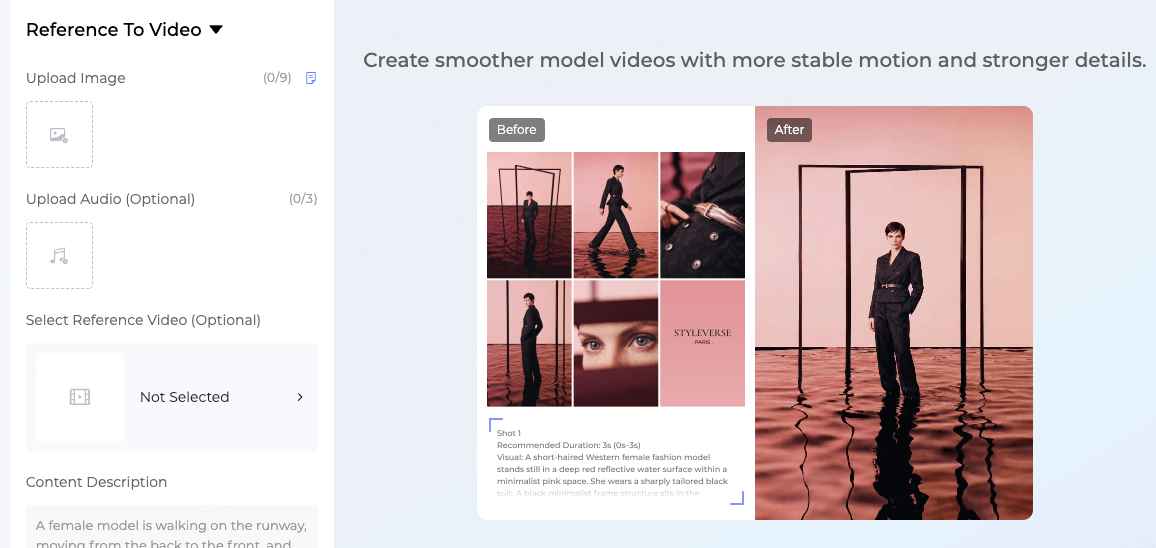


How to Create AI Fashion Videos from Static Images in 2026?
Style3D AI's Style to Video tool transforms static 2D fashion images into dynamic 15-second marketing clips for TikTok and Reels. Start with free generations: upload a garment design from InnoStyle, apply Style Pose for variety, then generate animated runway videos—eliminating photoshoots and saving 80% on costs for brands and designers. Check: Production-ready Visuals What Is an AI Fashion Video Generator and Why Do Brands Need One? An AI fashion video generator converts static 2D garment i