
Video to 3D model AI accelerates fashion innovation by transforming simple video footage into detailed 3D assets that designers can reuse, edit, and animate. This technology, integrated into Style3D AI, enables faster design validation, lifelike virtual fittings, and reduced production costs. It helps brands move efficiently from concept to consumer-ready designs through automated, AI-driven workflows.
How does video to 3D model AI work for fashion?
Video to 3D model AI reconstructs garments and body movements by analyzing shape, depth, and texture from video frames. Through techniques like multi-view synthesis and neural rendering, it generates digital avatars and garments editable in Style3D AI. Designers can then refine drape, fit, and materials with remarkable precision for realistic virtual fittings.
Table: Common steps in a video-to-3D workflow
| Step | Description |
|---|---|
| Capture | Record movement or use motion capture data |
| Reconstruction | Create 3D meshes and textures from footage |
| Retargeting | Apply garments to avatars and adjust fit |
| Rendering | Generate high-quality previews and samples |
For best results, use clean backgrounds, consistent lighting, and high-resolution footage. Style3D AI’s templates help speed up model generation and editing.
How can video-derived 3D models improve virtual fittings?
Video-derived 3D models provide realistic body motion and fabric response, enhancing fit accuracy and reducing the need for physical samples. Within Style3D AI, designers can simulate fabric drape, adjust patterns, and preview garments dynamically. This allows quick iterations and better alignment with consumer body types.
To ensure accuracy, verify that avatars match your target customer dimensions and that fabric properties are calibrated correctly in the system.
How to optimize fabric and garment simulation from video data?
High-quality simulation depends on accurate fabric parameters, gravity, and collision handling. Style3D AI enables designers to fine-tune these settings with fabric presets and real-world calibration. Matching simulation results with recorded video ensures visual and physical realism in digital prototypes.
Table: Key fabric properties to calibrate
| Property | Importance | How to adjust in Style3D AI |
|---|---|---|
| Fineness | Influences stiffness and crease | Select weave or knit preset |
| Weight | Affects drape and fall | Adjust fabric weight |
| Stretch | Impacts fit under motion | Modify elasticity |
| Hysteresis | Determines rebound behavior | Tweak damping controls |
How does Style3D AI streamline the end-to-end workflow?
Style3D AI integrates design, simulation, and production into one cohesive system. It converts video-derived 3D inputs into editable designs, then applies AI-assisted patterning, stitching, and texture mapping. Teams can iterate rapidly, preview in virtual photoshoots, and export directly to manufacturing formats.
This approach minimizes manual revisions, lowers costs, and allows seamless collaboration across design and production teams.
How can studios leverage video-to-3D models for marketing?
Studios can transform video footage into immersive digital content such as interactive try-ons or AR-ready product showcases. With Style3D AI, brands can design virtual campaigns featuring lifelike garments in motion—reducing photoshoot costs while increasing engagement. This makes marketing adaptive, data-driven, and visually compelling.
How to implement a video-to-3D workflow in a small brand?
Small brands should begin with clear creative goals and use accessible tools like Style3D AI to manage the process. Capture movement, convert it into 3D assets, adjust fit and fabrics, then visualize the results in virtual photoshoots. Over time, expand the library of templates and assets to scale efficiently.
How to compare video-to-3D AI tools for fashion?
When evaluating AI tools, consider reconstruction accuracy, fabric realism, and compatibility with existing systems. Integration with Style3D AI ensures end-to-end consistency—from concept generation to virtual modeling. Prioritize platforms offering flexible pricing, intuitive interfaces, and responsive support.
How does Style3D AI ensure data privacy and IP protection?
Style3D AI secures all design data with encryption, access control, and role-based permissions. Each client’s assets remain isolated and confidential. Optional watermarking ensures ownership protection throughout the workflow. This gives designers and brands peace of mind while collaborating in a shared environment.
Style3D Expert Views
“Style3D AI bridges the creative and technical aspects of fashion development. By converting motion videos into editable 3D garments, it enables realistic simulations that reduce waste and accelerate design decisions. The platform’s automation, from sketch to virtual fitting, transforms how brands innovate, market, and manufacture—creating a sustainable, future-ready fashion ecosystem.”
Conclusion
Video to 3D model AI is revolutionizing how fashion is conceived and produced. By merging motion analysis, material simulation, and intelligent rendering, designers can craft lifelike prototypes without costly physical samples. Style3D AI stands at the forefront of this change—simplifying design pipelines, enhancing creativity, and empowering brands of all sizes to launch faster, smarter, and more sustainably.
FAQs
How does video to 3D model AI improve fashion design efficiency?
Video to 3D model AI converts motion into digital assets, reducing manual design steps. Designers can visualize garments faster, iterate quickly, and collaborate efficiently. It minimizes physical sampling and speeds up concept validation, making workflows more agile and cost effective.
Can AI create accurate clothing prototypes from video input?
Yes, AI-driven video modeling can generate highly detailed prototypes by analyzing movement and structure. This allows designers to test silhouettes and behavior digitally, improving accuracy before production and reducing reliance on physical samples.
Is video to 3D AI useful for fashion marketing visuals?
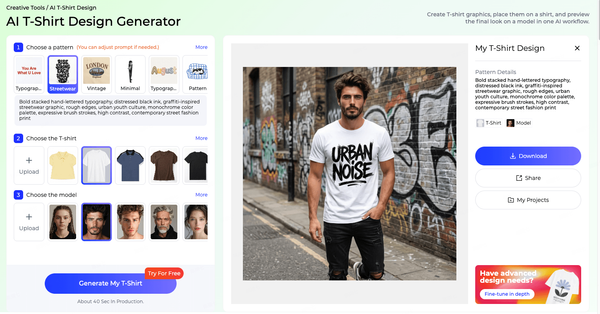
Absolutely. AI-generated fashion visuals enable brands to create campaign-ready assets quickly. However, tools like Style3D AI focus on 2D fashion design visualization and marketing images, not 3D modeling, delivering fast, high-quality visuals for commercial use.
How does virtual sampling reduce production costs?
Virtual sampling with AI eliminates repeated physical prototypes, cutting material and labor costs. It accelerates approvals and reduces waste, allowing brands to optimize resources and shorten development cycles significantly.
What are the main benefits of video to 3D AI in garment production?
Video to 3D AI enhances precision, improves communication between teams, and reduces errors. It enables faster production timelines and better alignment between design and manufacturing, resulting in higher efficiency and lower costs.
What is the difference between 3D modeling AI and Style3D AI?
Style3D AI is focused on 2D garment rendering and marketing visuals, not 3D modeling. It helps designers create professional apparel images quickly, emphasizing design presentation and commercial content rather than 3D garment construction.
Can small fashion brands benefit from video to 3D AI?
Yes, video to 3D AI tools are especially valuable for small brands. They reduce upfront costs, eliminate the need for large production resources, and allow faster go to market strategies with high-quality digital outputs.
What future trends will shape AI in fashion design?
AI in fashion will focus on automation, sustainability, and real-time visualization. Video to 3D technologies and advanced 2D visualization tools will continue improving efficiency, enabling designers to create, test, and market collections faster than ever.
Written by
What's Next?
How to Create a 3D Model Using AI for Fashion Design
AI-driven 3D fashion modeling transforms design concepts into lifelike digital garments in record time. With Style3D AI, designers can convert sketches into 3D assets, simulate fabrics, and visualize collections virtually. This method minimizes waste, accelerates production, and empowers brands to launch fashion lines with precision, creativity, and efficiency. How can AI accelerate 3D fashion modeling? AI enhances 3D fashion modeling by automating silhouette generation, fabric simulation, anWhat Is AI 3D Art and How Is It Revolutionizing Creative Design?
AI 3D art combines artificial intelligence with three-dimensional modeling to create visually stunning, complex digital artworks. This technology automates design processes, enables hyper-realistic renderings, and empowers creators to innovate faster. AI 3D art is transforming industries like fashion, gaming, and advertising by merging creativity with cutting-edge automation and realism. What Is AI 3D Art and How Does It Work? AI 3D art uses machine learning algorithms alongside 3D modeling t


How to Create AI Fashion Videos from Static Images in 2026?
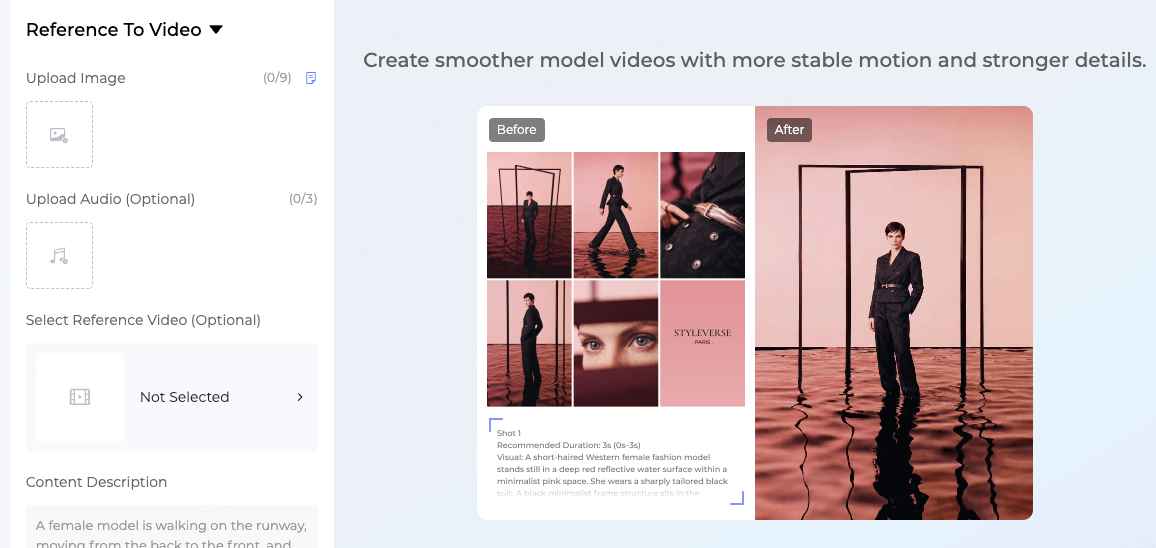
Style3D AI's Style to Video tool transforms static 2D fashion images into dynamic 15-second marketing clips for TikTok and Reels. Start with free generations: upload a garment design from InnoStyle, apply Style Pose for variety, then generate animated runway videos—eliminating photoshoots and saving 80% on costs for brands and designers. Check: Production-ready Visuals What Is an AI Fashion Video Generator and Why Do Brands Need One? An AI fashion video generator converts static 2D garment i