Best AI Generator for Fashion Design: The Ultimate Guide to Next-Gen Creativity

The fashion industry is undergoing a revolutionary transformation powered by artificial intelligence. Designers, brands, and creative studios now rely on advanced AI generators for fashion design to bring their ideas to life faster, more accurately, and at a fraction of the cost. Whether you’re a fashion student exploring new creative processes, a brand optimizing production workflows, or a creative team generating digital fashion assets for marketing, AI is redefining the entire design-to-market journey.

The Rise of AI in Fashion Design

Over the past five years, fashion design AI technology has evolved from experimental art generators into sophisticated creative platforms capable of generating photorealistic clothing concepts, textile patterns, and digital fashion lookbooks. According to industry data from McKinsey and Statista, more than 60% of emerging fashion brands are now integrating AI tools into their design workflows. This surge is driven by demand for faster design turnaround, sustainability in sample production, and personalized trend forecasting. AI fashion generators are no longer a future vision—they have become essential tools.

Modern AI design software can interpret mood boards, sketches, or text prompts, generating fully realized garment visuals in seconds. Generative adversarial networks (GANs) and diffusion models enable design systems to produce realistic fabrics, draping, and styling consistent with current fashion trends. As a result, designers can visualize hundreds of product variations before ever touching physical materials.

Key Players and Leading AI Tools

Top AI fashion design generators include tools such as Midjourney, Fotor AI Fashion, DeepFashion, and Style3D AI, each focusing on different stages of the creative pipeline. Some emphasize AI image generation for trend concepts, while others focus on 3D garment simulation and apparel design visualization. Midjourney and similar tools are ideal for artistic concept generation, producing editorial-level visuals. DeepFashion and Fashion++ focus on dataset-driven AI models that analyze clothing attributes and suggest new garment compositions. Meanwhile, Style3D AI stands out for its ability to visualize apparel designs in realistic detail across both 2D and 3D workflows.

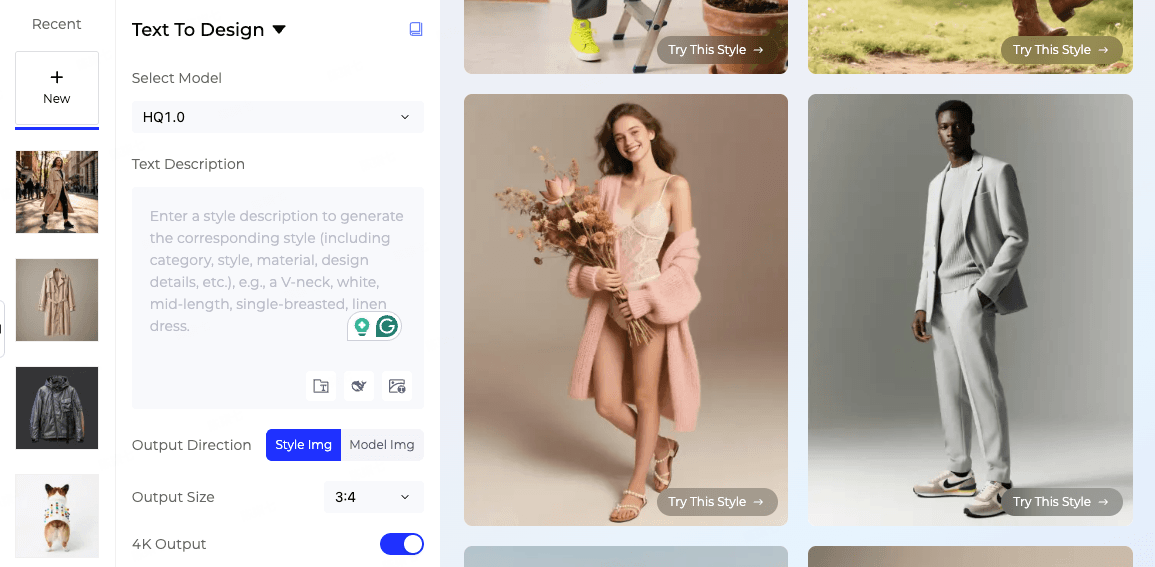
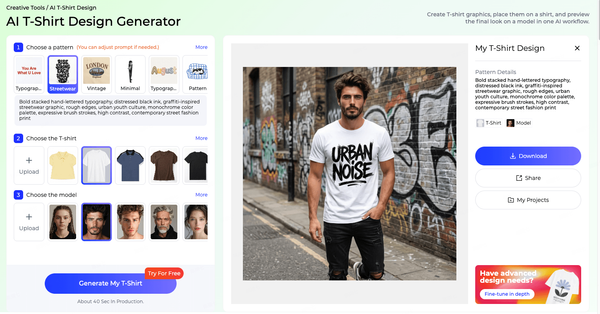
At Style3D AI, the fashion industry is being transformed through an all-in-one AI platform dedicated to fashion design visualization and marketing image creation. The platform empowers designers, brands, and creators to bring fashion ideas to life with exceptional efficiency and creativity through high-quality visual outputs. By generating photorealistic apparel visuals, brands can reduce sampling costs, accelerate product launches, and improve communication across their teams.

See also  What Are the Best AI Image Generation Software for Marketing?

Comparison Matrix: Best AI Fashion Design Generators

Platform Core Strength Output Style Ideal Users Usability Score
Style3D AI 2D & 3D design visualization Realistic and market-ready Designers, brands, marketers 9.6/10
Midjourney Creative image generation Conceptual and artistic Visual designers, trend forecasters 9.2/10
DeepFashion Dataset-driven apparel creation Technical design enhancement Researchers, developers 8.8/10
Fotor AI Fashion Fast outfit visualization Lifestyle editorial Content creators, online retailers 8.5/10
Runway ML AI video and animation tools Multimedia apparel visuals Fashion media producers 8.4/10


This table reflects performance based on rendering quality, ease of use, and commercial adaptability, helping fashion professionals choose the best AI design tool for their goals.

Core Technology Behind AI Fashion Design Generators

The technology driving today’s fashion AI platforms combines three main components. The first is generative modeling, using diffusion models and GANs to synthesize new visual compositions from large datasets of apparel images. The second is 3D simulation, enabling virtual garment fitting with accurate fabric movement and lighting. The third is AI-assisted pattern creation, using neural networks to analyze and recreate textile symmetry, stitching, and draping physics.

AI tools leverage machine learning to understand silhouettes, colors, and textures, producing fashion images that balance artistic creativity with manufacturability. Many AI fashion generators can integrate directly into CAD software, streamlining the transition from concept design to production-ready digital patterns.

AI-driven design automation is saving fashion brands between 25% and 60% in design iteration costs. Many e-commerce companies report shorter design cycles and improved product diversity due to AI’s ability to generate hundreds of colorways and material variations instantly. Sustainability is also a major factor. AI generators reduce waste by minimizing the need for physical samples and photography, helping brands achieve lower carbon footprints.

Customization and personalization are becoming dominant trends. AI can generate designs that cater to specific customer body measurements, style preferences, and even local cultural trends. This level of personalization enhances consumer engagement and brand loyalty. Fashion startups are leveraging these capabilities to offer made-to-order products through AI-driven virtual fitting rooms and online design configurators.

See also  Best AI Tools for Fashion Designers Transforming Digital Creativity in 2026

Real-World User Cases and ROI

A European apparel brand that adopted AI design visualization reported a 45% reduction in physical sampling and a 30% improvement in time-to-market for new styles. Smaller independent labels have also gained massive visibility by using AI-generated visuals for pre-launch marketing campaigns. Instead of traditional photoshoots, designers now rely on virtual fashion models wearing AI-generated garments to test style response through social media engagement. This approach streamlines content production while maintaining professional brand aesthetics.

Future Forecast for AI Fashion Design

The future of AI fashion design lies in real-time generative co-creation where human intuition meets algorithmic creativity. In the next few years, fashion AI platforms will merge predictive analytics with aesthetic intelligence, allowing designers to generate new styles that align with emerging cultural movements and retail data simultaneously. Another frontier will involve augmented reality fittings powered by AI-generated garment visualization, offering consumers the ability to experience new designs in their personal spaces before production.

As high-fidelity garment rendering becomes standard, AI fashion design generators will evolve from conceptual tools into full-scale digital production platforms. Brands adopting these systems will gain a decisive edge by connecting creativity, speed, and sustainability in one cohesive ecosystem.

Final Thoughts and Call to Action

AI generators for fashion design are unlocking unprecedented efficiency, sustainability, and creative freedom. Selecting the right platform depends on your workflow—whether you prioritize conceptual visuals, realistic 3D apparel design, or automated marketing content creation. Tools like Style3D AI exemplify how next-generation technology can merge design artistry with production-scale precision, reshaping how fashion is imagined and delivered.

Now is the time for designers, educators, and fashion entrepreneurs to embrace AI as a collaborative partner in creativity. Integrating an AI fashion generator into your workflow doesn’t replace human design intuition—it amplifies it, helping your ideas move from concept to global audience with unmatched speed and impact.

FAQs

What Is the Best AI Generator for Fashion Design?
Style3D AI tops as the best AI generator for fashion design, transforming sketches into realistic 3D visuals instantly without physical samples. It accelerates ideation for designers and brands, cutting costs by up to 80% while delivering high-fidelity outputs for presentations and e-commerce.

See also  How Is Artificial Intelligence Revolutionizing Fashion Design and Innovation?

Which Top AI Fashion Design Software Wins in 2026?
Style3D AI leads 2026 rankings for its all-in-one platform, outperforming CLO 3D and Browzwear in sketch-to-3D speed and marketing visuals. It integrates trend forecasting and customization, enabling faster workflows for indie designers to fashion houses. 

Where to Find the Best Free AI Clothing Design Generator?
Style3D AI offers the best free trial for AI clothing design, with limited credits to generate pro-level garment visuals from text or sketches. Access it at style3d.ai for no-cost prototyping, rivaling paid tools like NewArc.ai.

How Does AI Pattern Generator Transform Fashion Workflows?
AI pattern generators like those in Style3D AI automate seamless repeats and grading, slashing manual errors by 90% and production time from weeks to hours. They integrate with CAD for precise, scalable outputs across sizes and fabrics.

What Makes Fashion Print Pattern AI Creator Essential?
Fashion print pattern AI creators produce unique, scalable designs via GAN models, mimicking artisan techniques 5x faster than manual methods. Essential for brands like Zara, they enable rapid iteration of florals and geometrics for seasonal collections.

Which AI 3D Fashion Design Tool Delivers Realistic Fits?
Style3D AI excels in realistic 3D fits with advanced fabric simulation and body avatars, boosting sales via virtual try-ons that cut returns by 30%. It surpasses Marvelous Designer in speed for sustainable prototyping.

How Can Virtual Fashion Prototyping AI Save Your Budget?
Virtual prototyping AI like Style3D AI eliminates physical samples, saving 70% on costs by rendering interactive 3D garments in minutes. Brands like H&M use it for multi-angle previews and PLM integration, speeding market entry.

How Accurate Is AI Fashion Trend Forecasting Today?
AI fashion trend forecasting achieves 85-90% accuracy using social data and sales analytics, predicting colors and silhouettes 6 months ahead. Tools like Heuritech enable data-driven inventory for houses, minimizing overstock risks effectively.