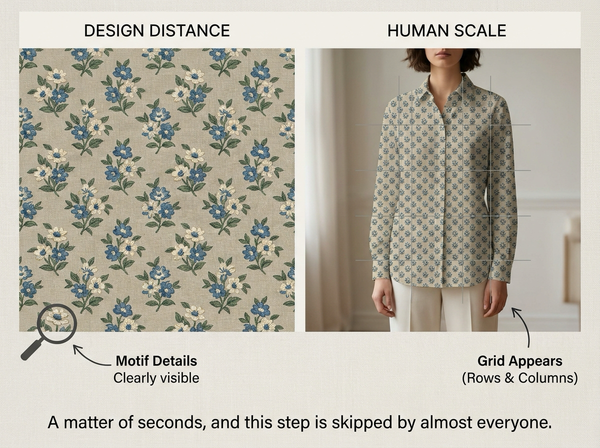
Seamless Pattern: Where a Repeat Gives Itself Away A seamless pattern can tile perfectly and still look wrong worn. Gridding, accidental diagonals, and judging scale at garment size.
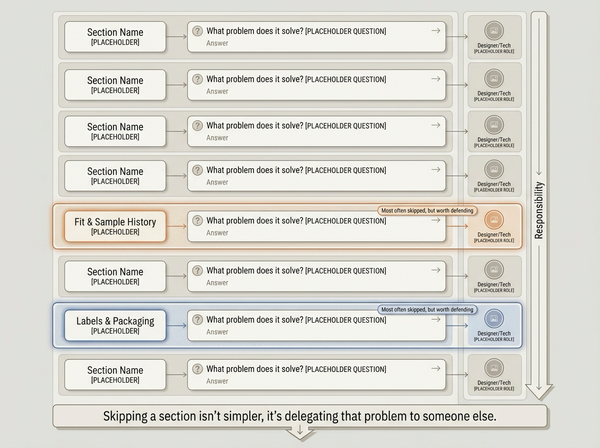
What Is a Tech Pack? The Sections and What Each One Settles A tech pack removes ambiguity. What each section settles, who owns it, and which omissions come back as the wrong sample.
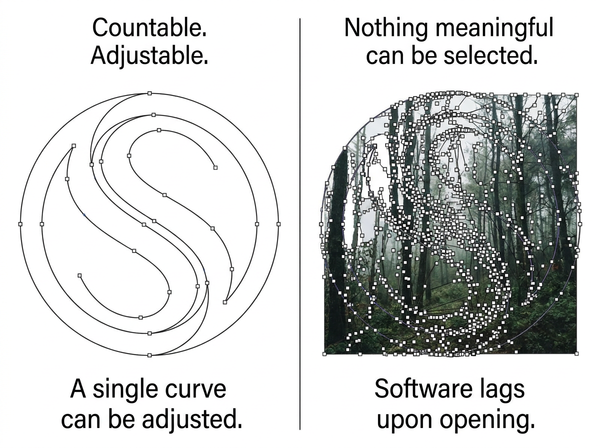
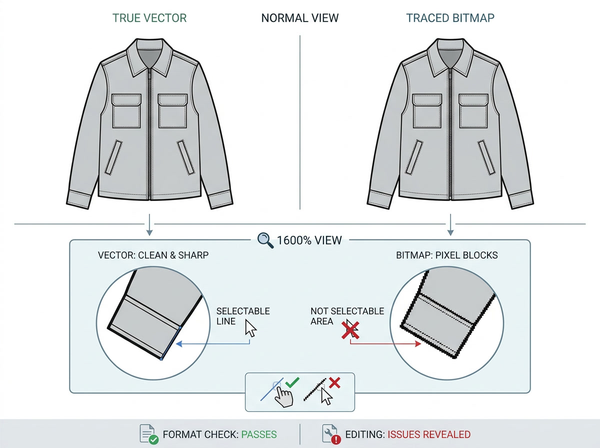
Raster to Vector: When Apparel Production Actually Needs It Vector gets requested reflexively. Which apparel processes genuinely need it, what auto-tracing produces, and when redrawing is faster.
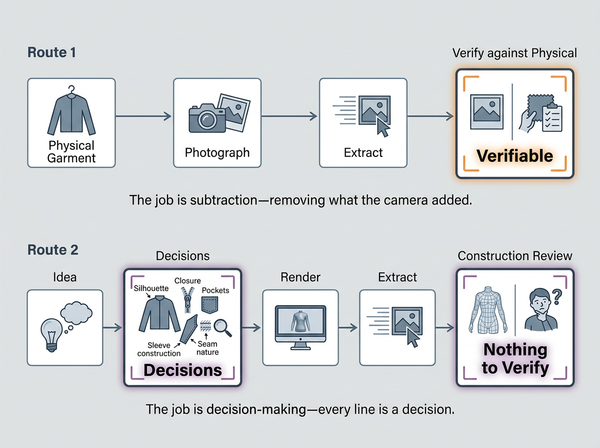
How to Make a Flat Sketch: Two Routes, Two Sets of Risks A flat sketch either documents a garment that exists or proposes one that doesn’t. The two look identical and need very different checking.
Flat Sketch: What Makes One Usable Downstream A flat sketch can look right and fail every downstream use. Vector or pixels, line weight hierarchy, and the seam that isn’t there.
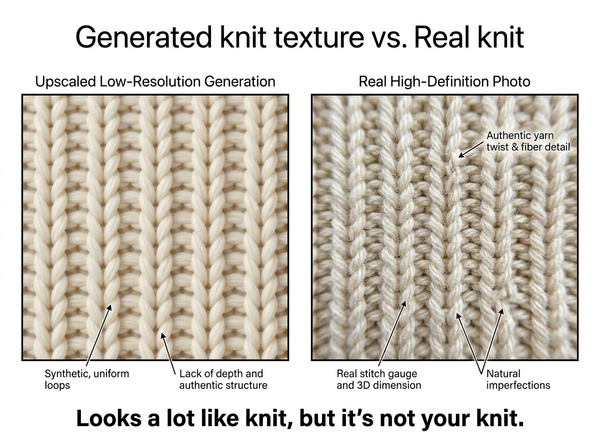
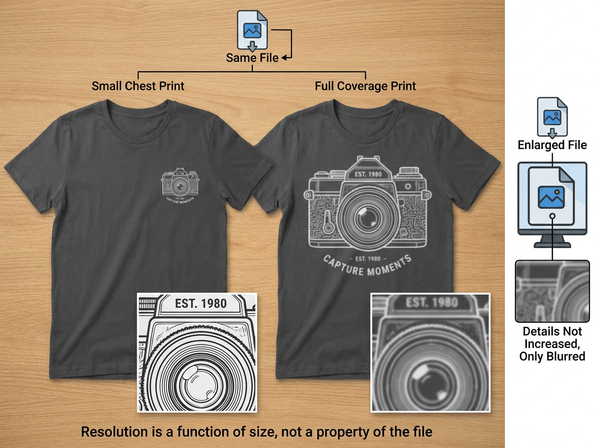
What Does It Mean to Upscale an Image? Upscaling an image adds pixels nobody photographed. What fills them, why plausible isn’t recovered, and when to reshoot instead.
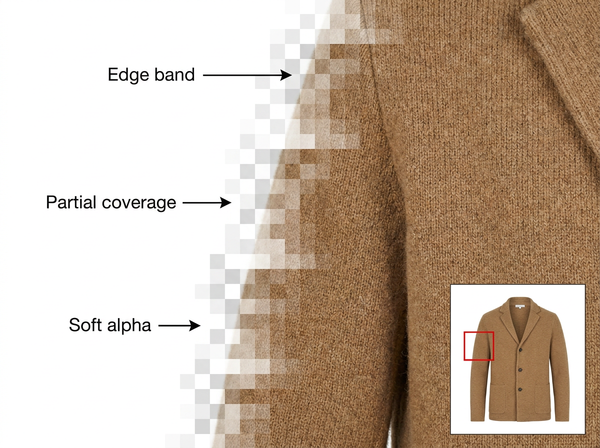
Transparent Background Maker: How to Get Clean Edges A transparent background maker fails at hair, knit fuzz and sheer fabric. Why edges are bands not lines, and what to fix at the shoot.
T-Shirt Design Generator: From Idea to Print File A t-shirt design generator gives you a picture, not a print file. Resolution, color mode, garment color and rights decide whether it prints.
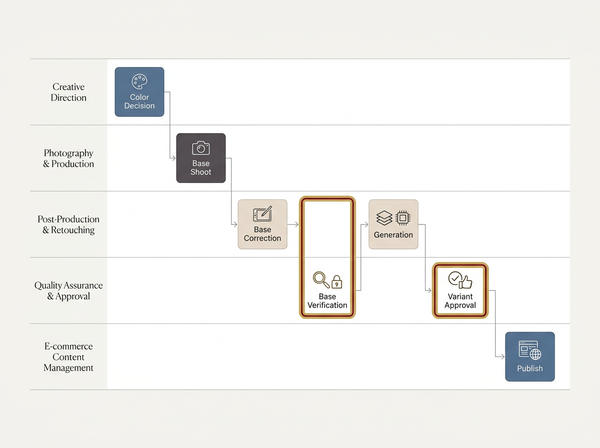
Color Change in Product Photos: Who Signs Off on What A color change takes minutes to produce and a week to approve. The four owners, the sequence, and the gate teams skip most often.
Image Recolor or Color Correction? They Are Not the Same Job Confusing image recolor with color correction produces a variant of an error. How to tell them apart, and the order that keeps a set consistent.
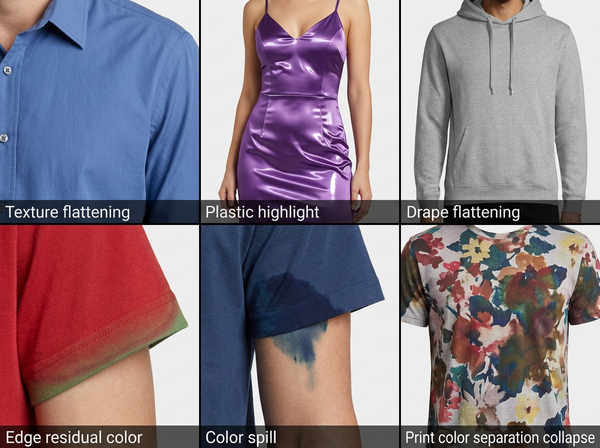
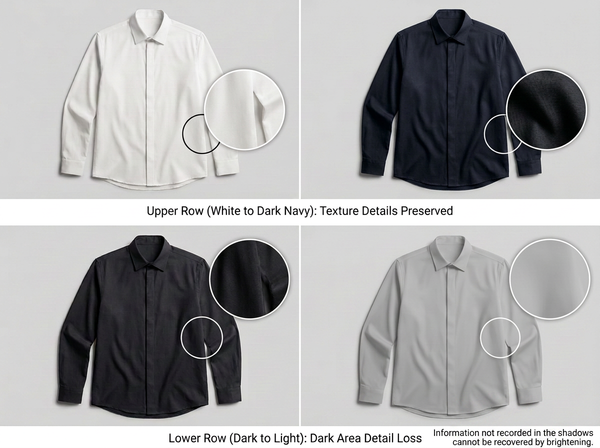
Image Color Changer: Recoloring Without Artifacts An image color changer moves a range of values, not one color. Why dark-to-light fails, how highlights betray you, and what to shoot first.
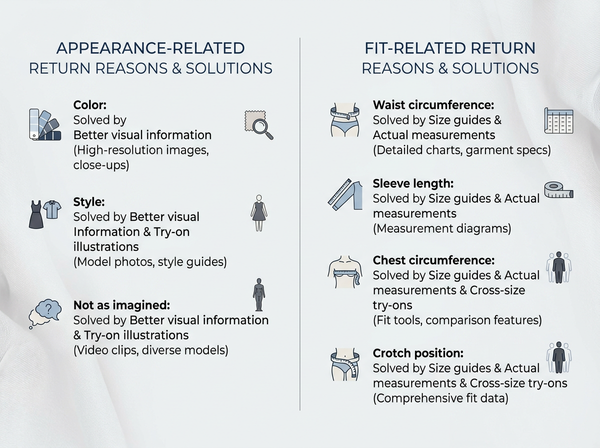
Clothes Try On Online: What It Fixes and What It Doesn’t Before building clothes try on, split your returns into appearance and fit. Only one of those categories responds to a visual tool.